November is one of those months when keeping students focused can become a little tricky! Between Thanksgiving excitement, schedule changes, and the anticipation of upcoming holidays, teachers need activities that capture students’ attention without sacrificing valuable instructional time.
The good news? Fall themes provide wonderful opportunities to practice reading comprehension, vocabulary, sequencing, and writing. And you don’t need to plan an elaborate fall unit to make learning meaningful!
Here are five fun fall literacy activities for first, second, and third graders that combine seasonal excitement with important reading and writing skills.
1. Become Story Detectives with Fall Read-Alouds 🍁
Literacy Focus: Making Inferences and Using Text Evidence
Who doesn’t love a good mystery? Fall picture books are perfect for turning students into reading detectives!
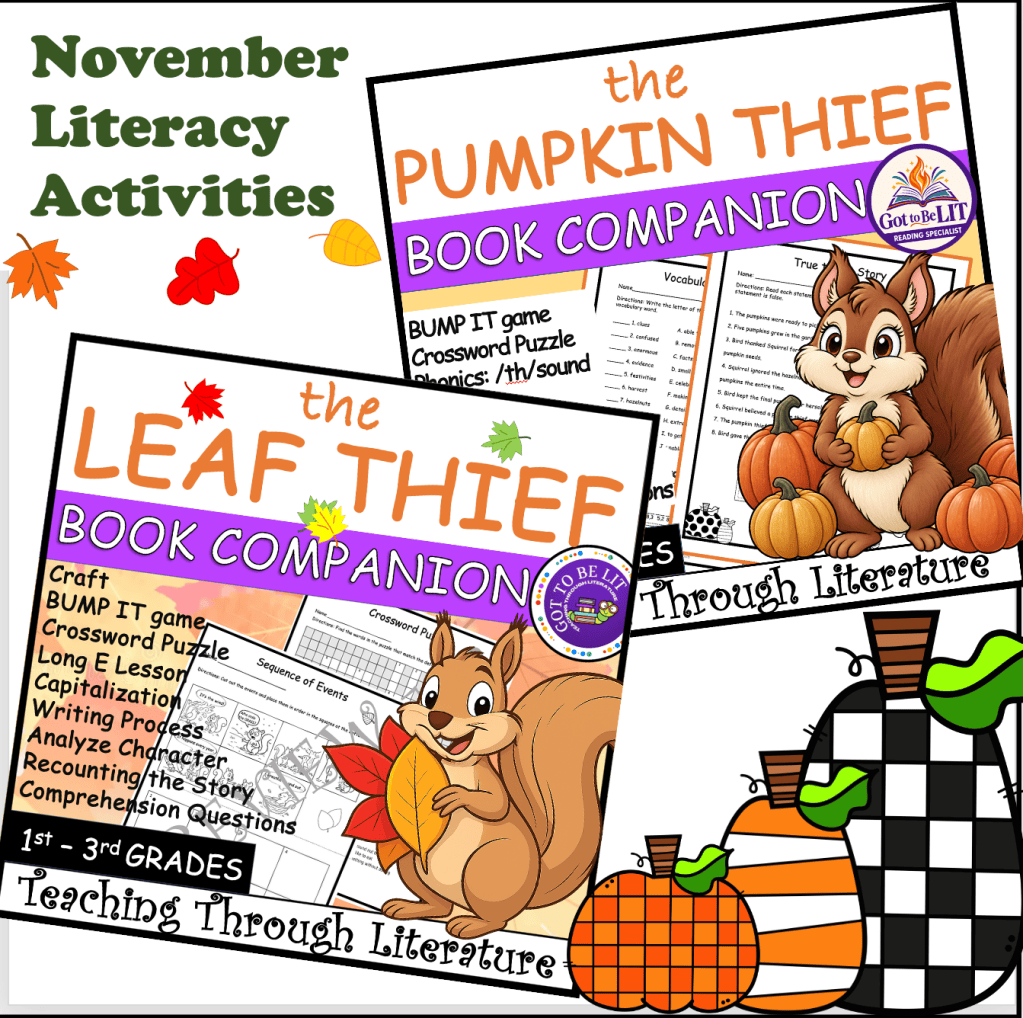
The Leaf Thief and The Pumpkin Thief by Alice Hemming are two fun choices. Both stories encourage students to make predictions, look for clues, and think about what characters are feeling.
Try this: Give each student a small paper leaf to use as an “evidence marker.” As you read, pause at important moments and ask students to look for clues.
When students notice something important, they hold up their leaves and explain their thinking.
Ask questions such as:
- What do you think will happen next? Why?
- How is the character feeling? What clues helped you decide?
- Did your prediction change as we read?
Teacher Tip: Encourage younger readers to use illustrations as evidence. Challenge older students to support their ideas with details from the text.
For additional comprehension practice, my The Leaf Thief and The Pumpkin Thief Book Companions offer ready-to-use reading activities.
2. Explore Story Elements with Scarecrow Activities 🌻
Literacy Focus: Story Elements and Reading Comprehension
Scarecrows are a fall classroom favorite, and they make a fun starting point for exploring story elements!
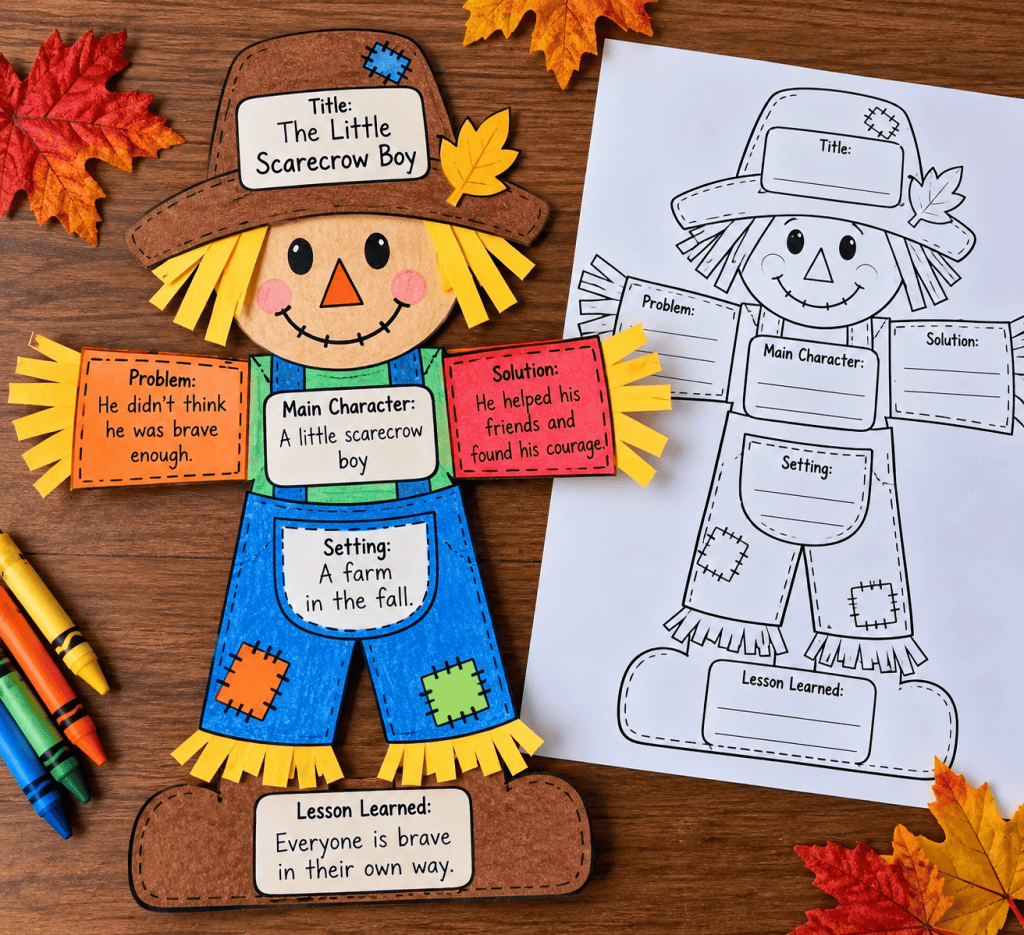
After reading a scarecrow-themed picture book, have students create a Story Scarecrow to show what they’ve learned.
Give students a scarecrow outline or let them draw their own. Then assign a story element to each part:
- Hat: Story title
- Face: Main character
- Shirt: Setting
- Arms: Problem and solution
- Boots: Lesson learned
Students can write or illustrate their responses before decorating their scarecrows.
Help students retell and analyze a story with this free Story Scarecrow craft! Students record the title, main character, setting, problem, solution, and lesson learned, then color and display their scarecrow. Click the button below.
Teacher Tip: For younger students, focus on characters, setting, and major events. Challenge older students to explain how the character changes or identify the story’s theme.
My Scarecrow Crafts and Fall Reading Activities Bundle offers additional opportunities for comprehension, vocabulary, poetry, and creative writing.
3. Practice Sequencing with a Thanksgiving Turkey Story 🦃
Literacy Focus: Sequencing and Retelling
Looking for a read-aloud that will have your students laughing while they learn?
How to Catch a Turkey by Adam Wallace is a fun choice for practicing sequencing and retelling.
After reading, challenge students to put the turkey’s adventures in the correct order.
Try this: Have students fold a sheet of paper into four sections labeled First, Next, Then, and Finally.
Students draw or write an important event in each section.
Once they’ve finished, invite them to retell the story to a partner using their illustrations.
For an extra challenge, students can invent their own silly turkey-catching plan and write directions using sequence words.
Teacher Tip: Let students practice retelling orally before writing. For multilingual learners, provide picture clues and sentence starters to support their responses.
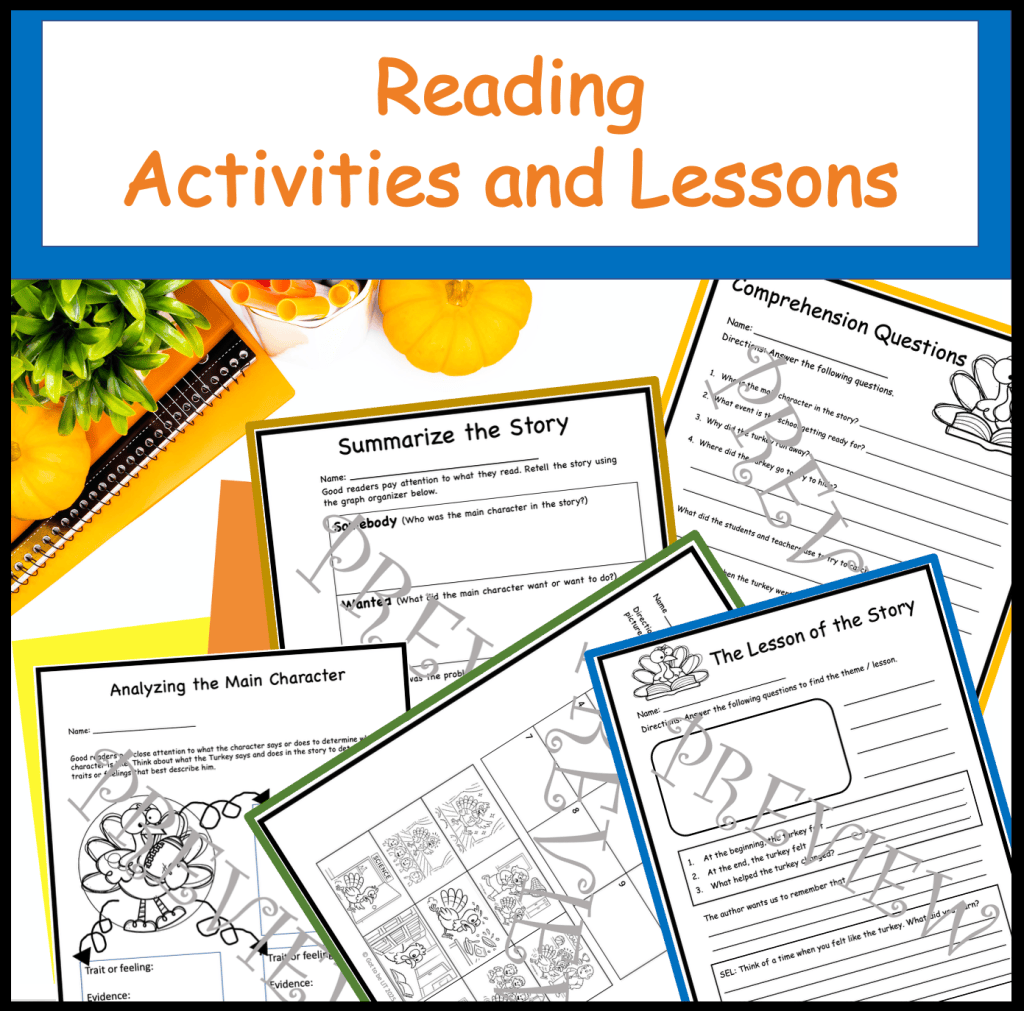
You can find more Thanksgiving reading activities in my How to Catch a Turkey Book Companion.
4. Turn Book Reports into Thanksgiving Decorations 📚
Literacy Focus: Story Elements and Summarizing
Who says book reports have to be boring?
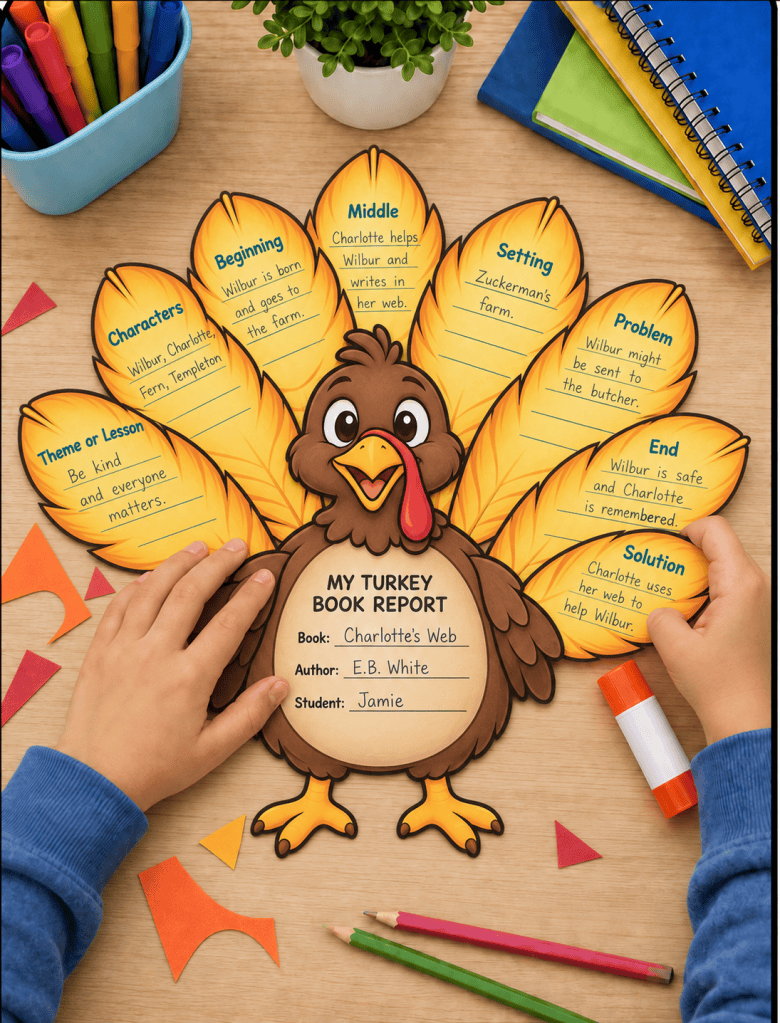
Turn a traditional reading response into a colorful Thanksgiving turkey! This simple twist gives students an opportunity to demonstrate comprehension while creating something fun to display.
Try this: After students finish reading a fiction book, have them create a turkey with feathers representing different story elements.
Each feather can include information about the characters, setting, problem, solution, or favorite part.
Students write their responses, decorate their turkeys, and assemble their projects.
Display the finished work on a bulletin board titled:
“Gobble Up a Good Book!”
Teacher Tip: Adjust the number of feathers to match students’ needs. Younger students might complete three or four, while older students can add character traits, theme, or a book recommendation.
My Turkey Book Report Craftivity includes planning pages, comprehension feather choices, templates, and bulletin board materials to make this project easy to prepare.
5. Encourage Meaningful Writing with Gratitude Turkeys 🧡
Literacy Focus: Reflective Writing and Supporting Details
November is the perfect time to encourage students to think about the people and experiences they’re thankful for.
But instead of simply listing things they appreciate, challenge students to explain why they’re thankful.
Try this: Begin with a class discussion about gratitude. Encourage students to think about the people who help them, experiences they enjoy, and little things that make them happy.
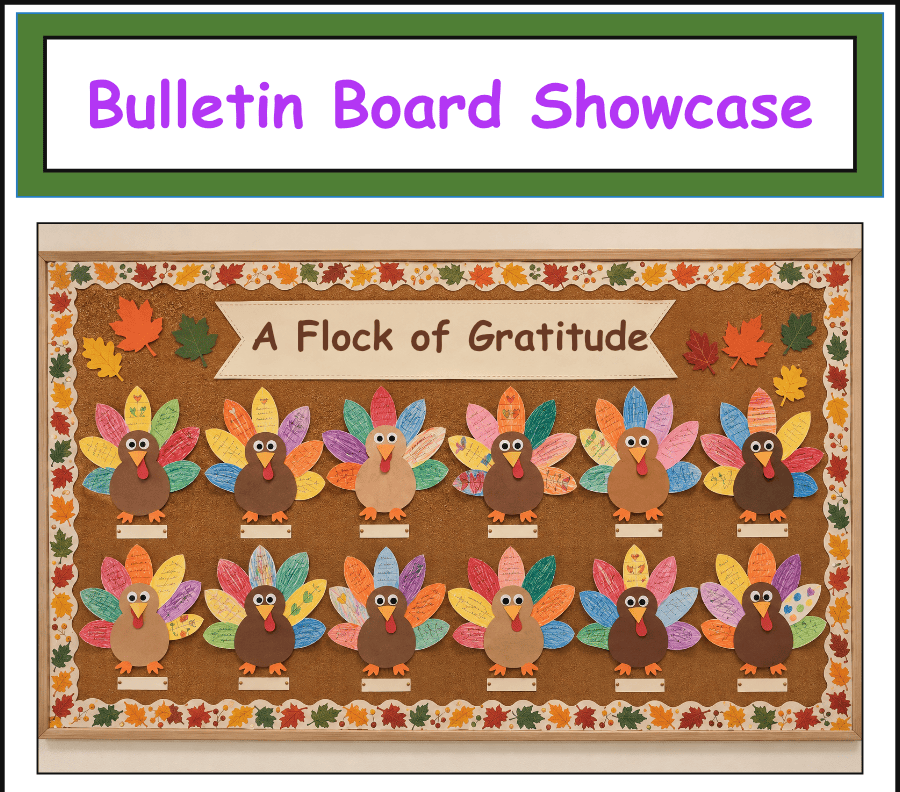
Then have students write their responses on turkey feathers and assemble them into a colorful gratitude display.
Here’s a simple way to strengthen their writing:
Instead of writing:
“I’m thankful for my teacher.”
Encourage students to add a reason:
“I’m thankful for my teacher because she helps me learn new things.”
Teacher Tip: Model a thoughtful response before students begin. Younger writers can use the sentence frame “I’m thankful for ___ because ___.” Encourage older students to add specific details or examples.
My Thanksgiving Gratitude Turkey Craft and Writing Activity combines reflective writing with a creative fall project.
🍁 Try This Tomorrow: Fall Story Detectives!
Need a quick literacy activity with almost no preparation?
Grab your favorite fall picture book and give students this three-part challenge:
Find It! Identify one important story detail.
Think About It! Explain how a character felt and why.
Prove It! Share a clue from the story that supports your answer.
Students can respond orally, illustrate their answers, or write complete sentences.
It’s a quick way to practice comprehension, inferencing, and using text evidence without preparing a complicated lesson!
Make November Literacy Planning a Little Easier
November may be busy, but meaningful literacy instruction doesn’t have to be complicated!
Whether your students are solving fall mysteries, creating story scarecrows, or turning book reports into Thanksgiving turkeys, these activities provide opportunities to strengthen important literacy skills while enjoying the season.
Looking for more ready-to-use fall reading and writing activities? Visit my Got to Be LIT TpT Store for book companions, seasonal literacy activities, and creative classroom projects.
Please tell me in the comments below, What’s your favorite fall picture book to share with your students?


