
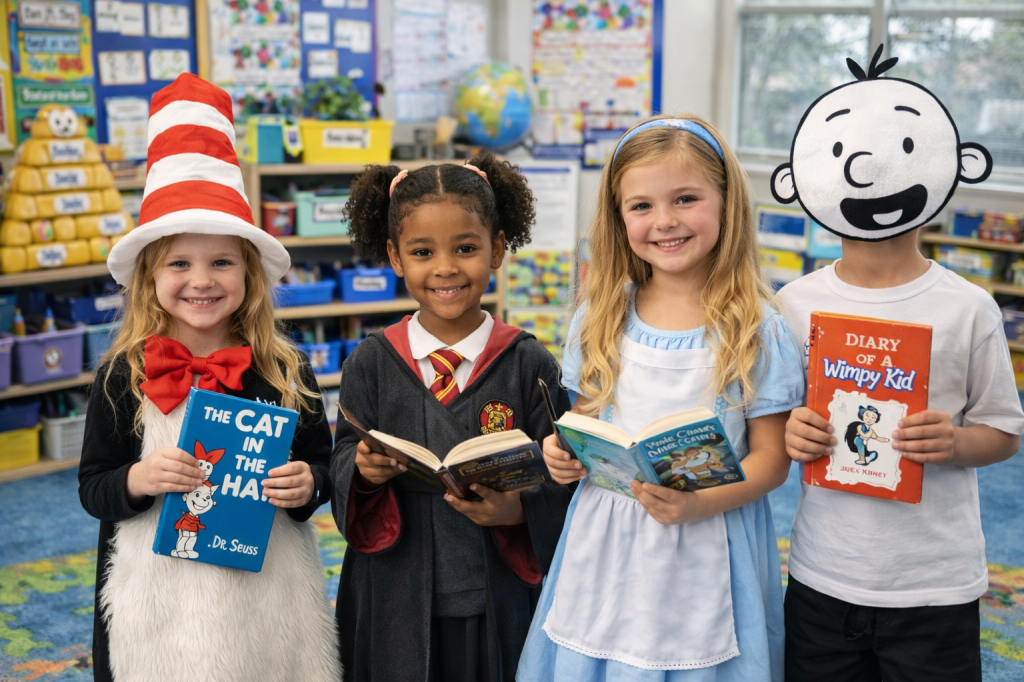
March is one of my favorite months in the classroom because it’s National Reading Month — a time to celebrate books, stories, and the joy of reading.
For teachers in grades 2–3, it’s also a perfect opportunity to help students build reading stamina, strengthen comprehension, and fall in love with books.
Over the years, I’ve found that the simplest activities often have the biggest impact. If you’re looking for easy, meaningful ways to celebrate, here are seven classroom ideas that students absolutely love.
1. Host a Classroom Reading Challenge
Build Motivation + Reading Stamina
A reading challenge adds instant excitement and gives students a clear goal to work toward.
In my classroom, I’ve noticed that even reluctant readers become more engaged when they can see their progress grow each day.
Try this:
- A class goal (ex: 300 minutes of reading)
- A reading bingo board
- A book tracker where students color a book each time they finish one
Simple tip:
Start on March 1 and check in daily for just 2–3 minutes. Keep it visible on a bulletin board so students feel the momentum building.
Materials needed: tracker sheet, chart paper or bulletin board space, crayons/markers
2. Mystery Reader Days
Build Community + Listening Skills
Mystery readers are always a hit. The excitement starts before the reader even walks in!
I’ve had students spend all morning trying to guess based on clues like, “This person loves dogs” or “This reader works in our school.”
Try this:
- Invite parents, staff, or even older students
- Give 2–3 clues ahead of time
- Reveal the reader dramatically
Simple tip:
Schedule 1–2 mystery readers per week to keep the excitement going all month without overwhelming your schedule.
Materials needed: guest schedule, simple clue cards
3. Dress Like a Book Character
Boost Engagement + Book Talk Skills
This is one of those days students talk about all year.
Even shy students light up when they get to share about a character they love.
Have students share:
- the title of the book
- who their character is
- why they like that story
Simple tip:
Send a note home a week in advance with easy costume ideas (no pressure for elaborate outfits—hats, colors, or simple props work great). You should also dress up. I dressed like Miss Nelson from Miss Nelson is Missing one year. My students loved it!
Materials needed: optional props, sharing checklist
4. Create Book Reports That Students Actually Enjoy
Strengthen Comprehension + Creativity
Let’s be honest—traditional book reports don’t always spark excitement.
When I switched to more creative formats, I saw a huge difference in both effort and understanding.
Try formats like:
- pizza box book reports
- hamburger flipbook reports
- movie poster book reports
- newspaper reports
Students love showing their thinking visually, and it naturally supports comprehension skills like summarizing and identifying key details.
Simple tip:
Introduce one format per week or let students choose from a “menu” of options.
Materials needed: templates, construction paper, basic craft supplies
5. Solve a Reading Mystery
Practice Critical Thinking + Text Evidence
Reading mysteries feel like a game—but they’re packed with real comprehension practice.
I’ve seen students become fully locked in, working together to solve clues and prove their thinking.
Students practice:
- inference
- comparing details
- sequencing
- finding evidence in the text
Simple tip:
Use this as a Friday activity or center rotation. Let students work in pairs for more discussion and collaboration.
Materials needed: printed mystery activity or escape rooms, pencils, optional recording sheets
6. Start Each Day with a Read-Aloud
Build Vocabulary + Classroom Community
Even in 2nd and 3rd grade, read-aloud time is powerful.
Some of my best classroom moments have come from pausing mid-chapter and hearing students beg for “just one more page.”
Benefits:
- models fluent reading
- exposes students to richer vocabulary
- builds anticipation and excitement
Simple tip:
Keep it short and consistent—10 minutes each morning works beautifully.
Materials needed: a high-interest chapter book
7. End the Month with a Reading Celebration
Celebrate Growth + Build Positive Reading Memories
Ending with a celebration helps students connect reading with joy—not just assignments.
I’ve found that these moments stick with students long after the month is over.
Ideas include:
- a reading picnic in the classroom
- a book tasting where students read their peers’ book reports
- a “bring your stuffed animal and read” afternoon
- a class vote for favorite book of the month
Simple tip:
Plan this during the last week of March and tie it to your reading challenge goals for extra excitement.
Materials needed: blankets/towels, books, simple snacks (optional), voting slips
Why Reading Month Matters
The goal of Reading Month isn’t just to complete activities. It’s about helping students discover that reading can be fun, meaningful, and exciting. When I homeschooled my children, they learned to enjoy reading because I did fun things with the books they read. When your students experience books in positive ways, they will begin to develop something even more important than skills:
❤️ a lifelong love of reading, like my kids
If you’re planning reading activities for your classroom, you can find more literacy resources at Got to Be LIT, where I share reading activities, book companions, and creative comprehension tools for grades 2–3.
To check out my TpT store for more great resources, click the button below.
Discover more from Got to be LIT
Subscribe to get the latest posts sent to your email.

