

As an elementary educator, I am always looking for new and creative ways to engage my students in writing. One of my favorite writing units is poetry. Not only does poetry allow students to express themselves in unique and imaginative ways, but it also provides opportunities for them to practice important language and literacy skills. Here are some fun and easy introductory poetry forms that I like to teach my elementary students: Haiku, Shape Poems, Diamanté, and Acrostics.
Haiku
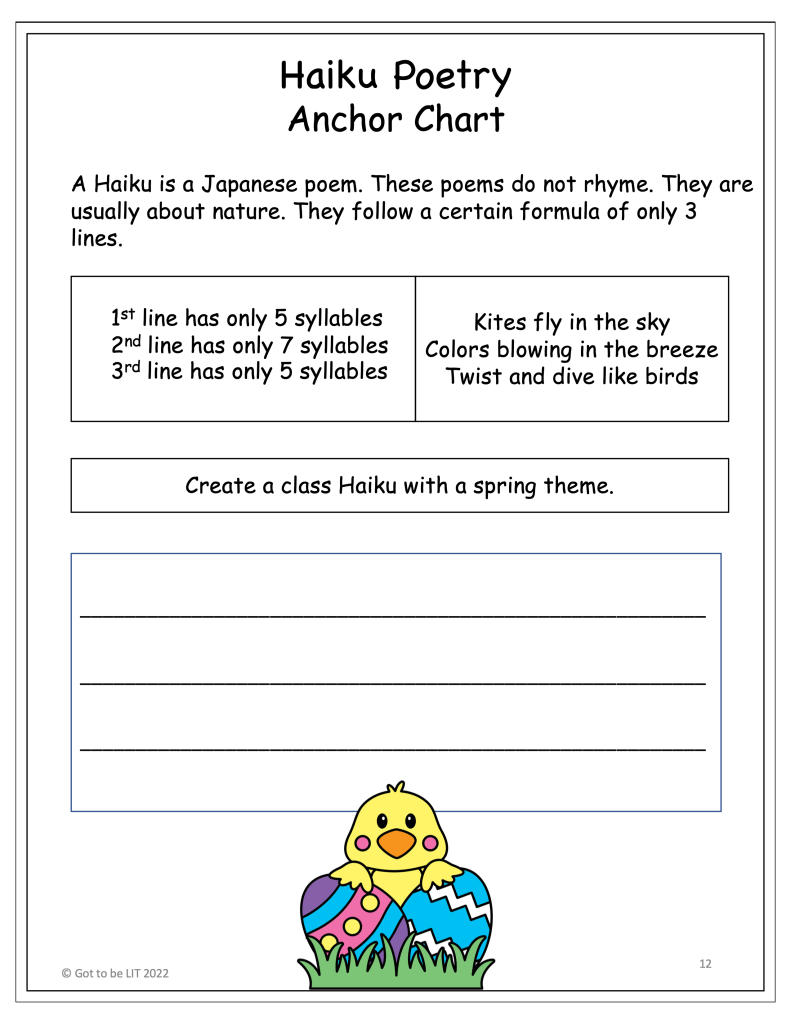
One of my favorite poetry forms to teach is Haiku. A Haiku is a Japanese poem. I start by explaining the basic structure of a Haiku: three lines, with the first and third lines containing five syllables, and the second line containing seven syllables. Afterwards, we brainstorm ideas and write a Haiku together. Then, I give my students a simple prompt, such as “the changing seasons,” and ask them to write their own Haiku. I’m always amazed at the creativity and depth of emotion that my students are able to express in just a few short lines. Here is an anchor chart I use to explain Haiku.
Shape Poetry
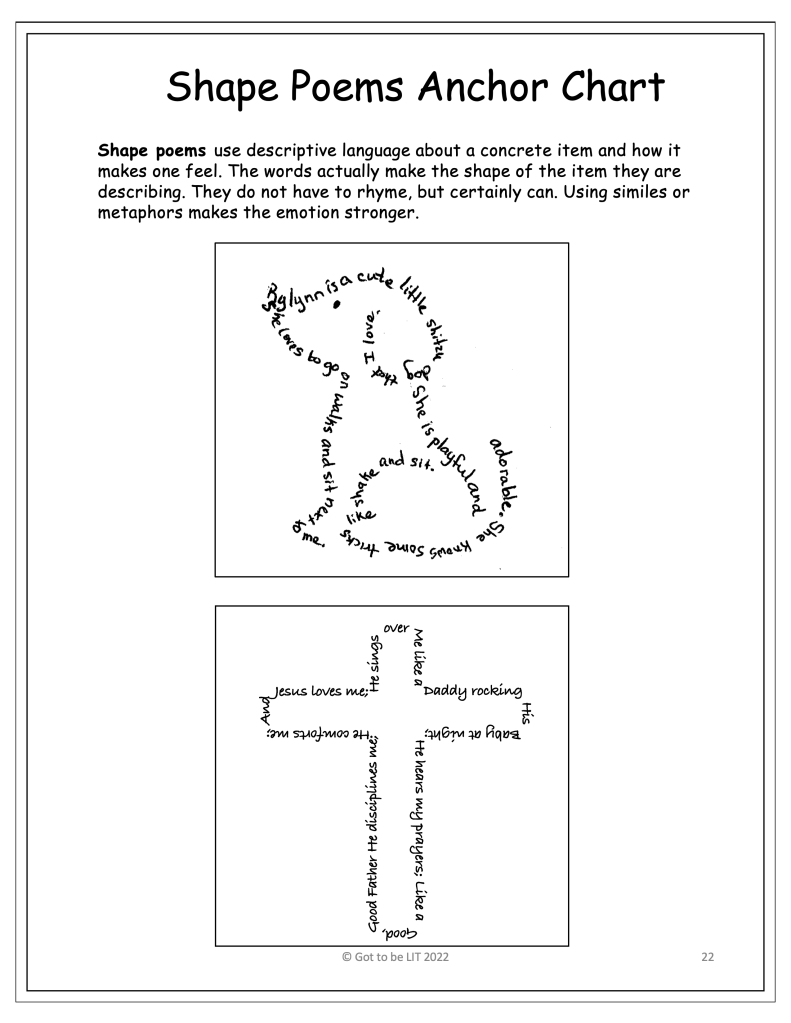
Another poetry form that my students love is shape poetry. I like to begin this lesson by reading “The Mouse’s Tale” by Lewis Carroll, which is a poem in the shape of a tail. After brainstorming a theme and how the students feel about it, then, I give my students a shape, such as a umbrella or a star, and ask them to write a poem that outlines the shape. This activity not only encourages students to think creatively, but it also helps them practice their spatial awareness and fine motor skills. Here is one I wrote about my daughter’s dog and another about Jesus as examples for my students.
Diamanté
Diamanté is another poetry form that is perfect for elementary students. This form consists of seven lines that form a diamond shape. The first and last lines contain one word, while the second and sixth lines contain two adjectives, the third and fifth lines contain three verbs, and the fourth line contains four nouns. I like to start by brainstorming ideas together and then writing a Diamanté as a class. Then, I give my students a simple topic, such as “the ocean,” and ask them to write their own Diamanté. It’s a fun and challenging activity that helps students practice their vocabulary and grammar skills.
Acrostic
Finally, I always like to end my poetry unit with acrostics. This form is simple but effective: students write a word vertically down the page, and then use each letter as the beginning of a new line in their poem. For example, if the word is “love,” the first line might start with “Laughter.” I like to share an anecdote about how I used to write acrostics for my friends’ names when I was a kid, and how much they loved receiving them. This always gets my students excited about the activity, and they love brainstorming words to use for their own acrostics.
In conclusion, teaching poetry forms such as Haiku, Shape Poems, Diamanté, and Acrostics can be a fun and engaging way to help elementary students develop their language and literacy skills. By encouraging creativity and personal expression, poetry can also help students develop their emotional intelligence and social skills. So why not give it a try in your classroom? You might be surprised at what your students are capable of creating.
Resources
I have a great poetry resource for spring and National Poetry Month here. It includes an anchor chart for each of four types of poetry, teacher explanations, brainstorming graphic organizers, and stationary for the students to write their own poems. Take a look at this resource for poem writing help.

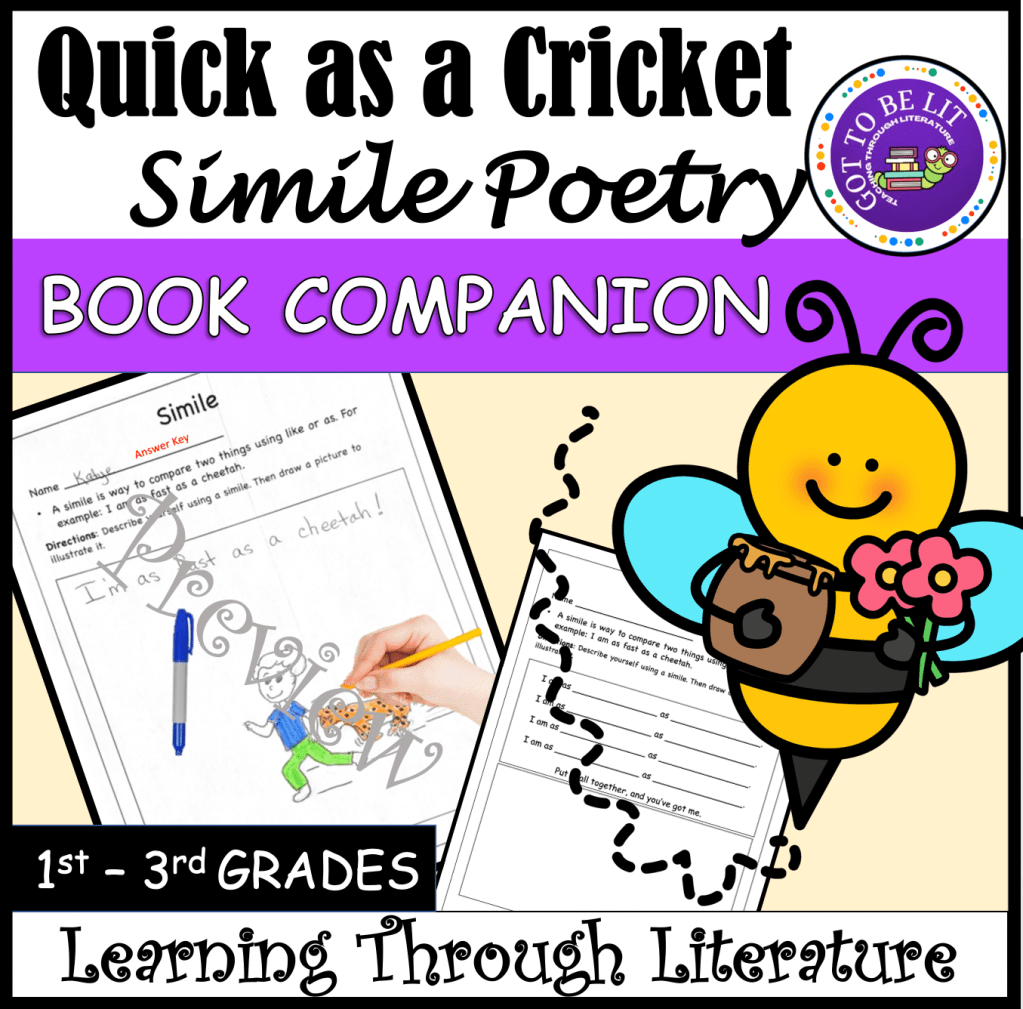
Another fun poetry form is a simile poem. Check out this resource:
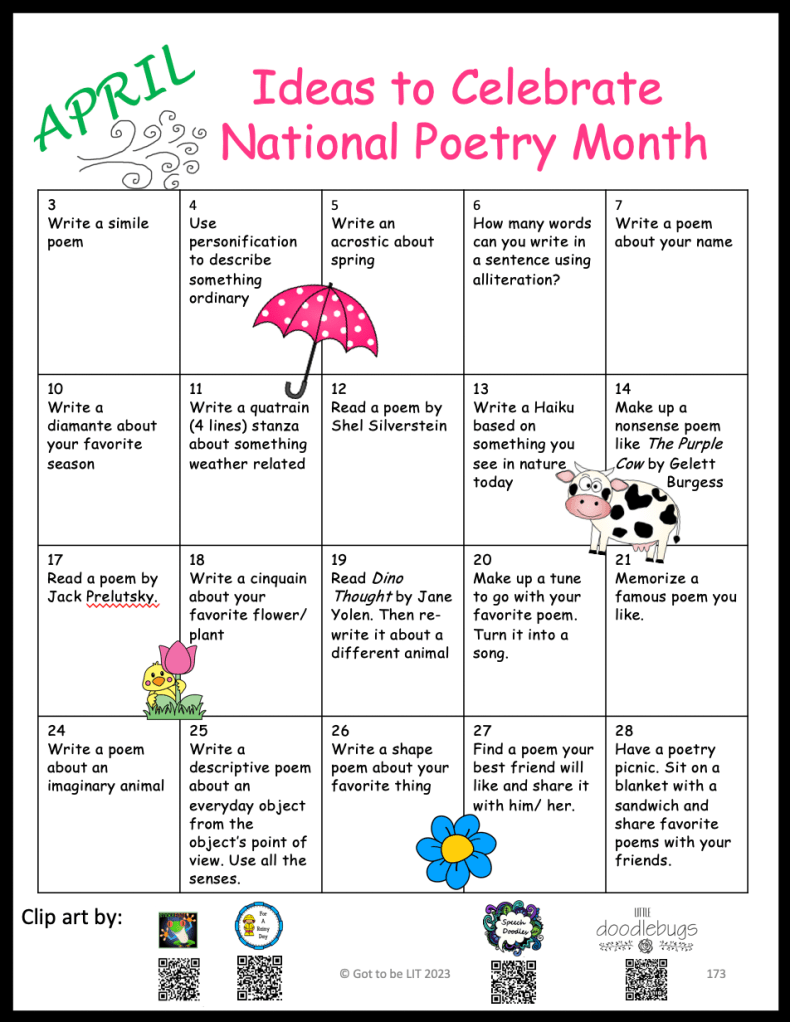
This April Calendar of Ideas is my FREE gift to you. Click on it to download it.
Discover more from Got to be LIT
Subscribe to get the latest posts sent to your email.


One thought on “Unlocking the Power of Poetry: Writing Haiku, Shape Poetry, Diamanté, and Acrostic”