
January is the perfect time to reset routines and strengthen core literacy skills after winter break. Students are settling back into school, and teachers are looking for meaningful, low-stress ways to reinforce essential reading strategies.
One of the most effective January literacy focuses for 2nd and 3rd grade?
👉 Context clues.
Why Teaching Context Clues Is So Important in Grades 2–3
Many students can decode words but struggle when they encounter unfamiliar vocabulary while reading. Instead of using the surrounding text, they often:
- Guess without evidence
- Skip the word altogether
- Or stop reading to ask for help
Explicit instruction in context clues helps students:
- Build vocabulary naturally while reading
- Improve reading comprehension
- Become more confident, independent readers
Context clues also support inferencing skills by teaching students to look for evidence in the text rather than guessing. If you’re looking for another engaging way to strengthen this connection, you may enjoy enhancing context clue skills through crossword puzzles.
January is an ideal time to focus on this skill because it supports vocabulary development, comprehension, and test-prep skills—without overwhelming students.
A Simple Weekly Context Clues Routine for January Literacy Instruction
One of the most effective ways to teach context clues is through consistent, predictable routines. When students know what to expect, they can focus on thinking deeply instead of figuring out directions.
Here’s a weekly context clues routine that works beautifully in 2nd and 3rd grade classrooms:
Weekly Context Clues Routine
Monday – Predict the Meaning
Students read a short paragraph with an unfamiliar word. They predict its meaning using context clues and identify the type of clue used.
Tuesday – Confirm with a Dictionary
Students use a dictionary to confirm or revise their predictions.
Wednesday – Explore Word Relationships
Students explore synonyms, antonyms, and parts of speech using a thesaurus.
Thursday – Illustrate the Word
Students draw a visual representation of the word’s meaning.
Friday – Apply the Skill
Students write a sentence or short paragraph using new context clues to show understanding.
This kind of predictable structure helps students feel confident and successful. It’s also a strong example of the power of systematic instruction in elementary literacy—where skills are intentionally built over time instead of taught in isolation.
Fun Context Clues Activities for Small Groups and Literacy Centers
January is also a great time to reintroduce small-group instruction and literacy centers, especially when cold weather limits movement and indoor recess becomes more common.
Context clues instruction works especially well in:
- Small groups
- Literacy centers
- Fast finisher time
- End-of-day review
- Test prep and spiral review
In small groups, students have more opportunities to explain their thinking and learn from one another. If you’re looking for ideas to maximize instructional time, this post on reading practice hiding in plain sight offers practical strategies that pair naturally with vocabulary instruction.
Extending Context Clues Across Reading and Literacy Centers
Context clues become even more powerful when students apply them across meaningful texts—not just isolated sentences.
Many teachers pair vocabulary instruction with literacy centers or integrated reading units like Sweet Reads & Skills packs, which allow students to practice context clues while reading authentic stories and passages.
This kind of integration helps students transfer the skill into real reading situations.
A Done-for-You Context Clues Resource for 2nd and 3rd Grade
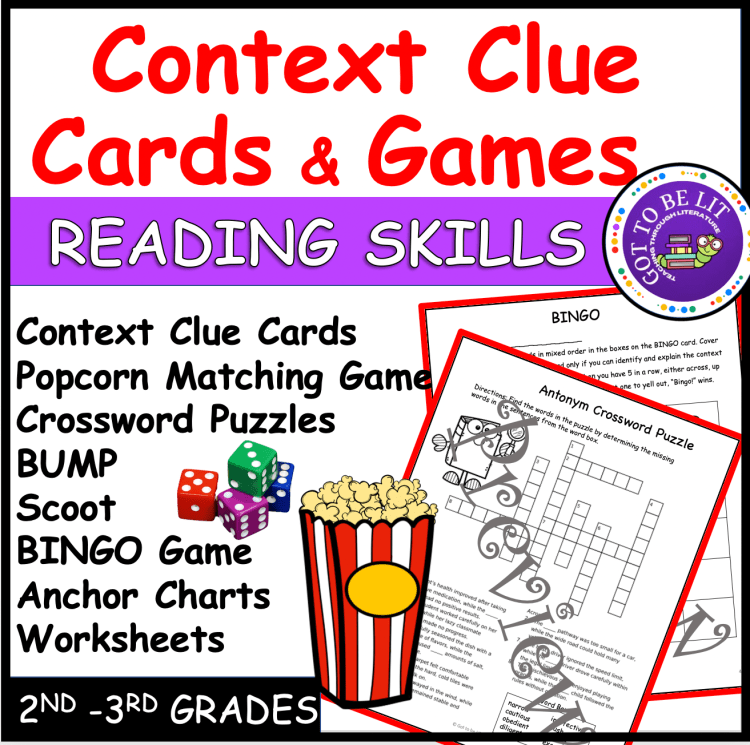
If you’re looking for a ready-to-use resource that fits seamlessly into your January literacy block, Context Clues Cards and Games for 2nd and 3rd Grade was designed to support predictable routines, small-group instruction, and engaging vocabulary practice.
⭐ Featured Resource: Context Clues Cards & Games (Grades 2–3)
The Context Clues Cards & Games resource helps students go beyond memorizing definitions and instead predict, check, illustrate, and apply word meanings in meaningful ways.
✔️ 40 context clue cards (perfect for Scoot or weekly spiral review)
✔️ Anchor charts and student response sheets
✔️ Engaging games: BUMP, BINGO, Popcorn Matching, and Crossword Puzzles
✔️ Worksheets for extra practice or assessment
✔️ Teacher guides and answer keys included
Perfect for:
- Small groups
- Literacy centers
- Fast finishers
- Whole-group instruction
- Test prep
👉 Context Clues Cards and Games for 2nd and 3rd Grade
Click the image to purchase:
January Vocabulary Instruction That Builds Reading Confidence
January doesn’t have to feel rushed or overwhelming. With the right routines and tools, it can be a powerful time to strengthen vocabulary and comprehension skills that carry students through the rest of the year.
Focusing on context clues helps students become stronger, more independent readers—and gives teachers a literacy routine that truly sticks.
To check out my TpT store for more great resources, click the button below:
Discover more from Got to be LIT
Subscribe to get the latest posts sent to your email.

