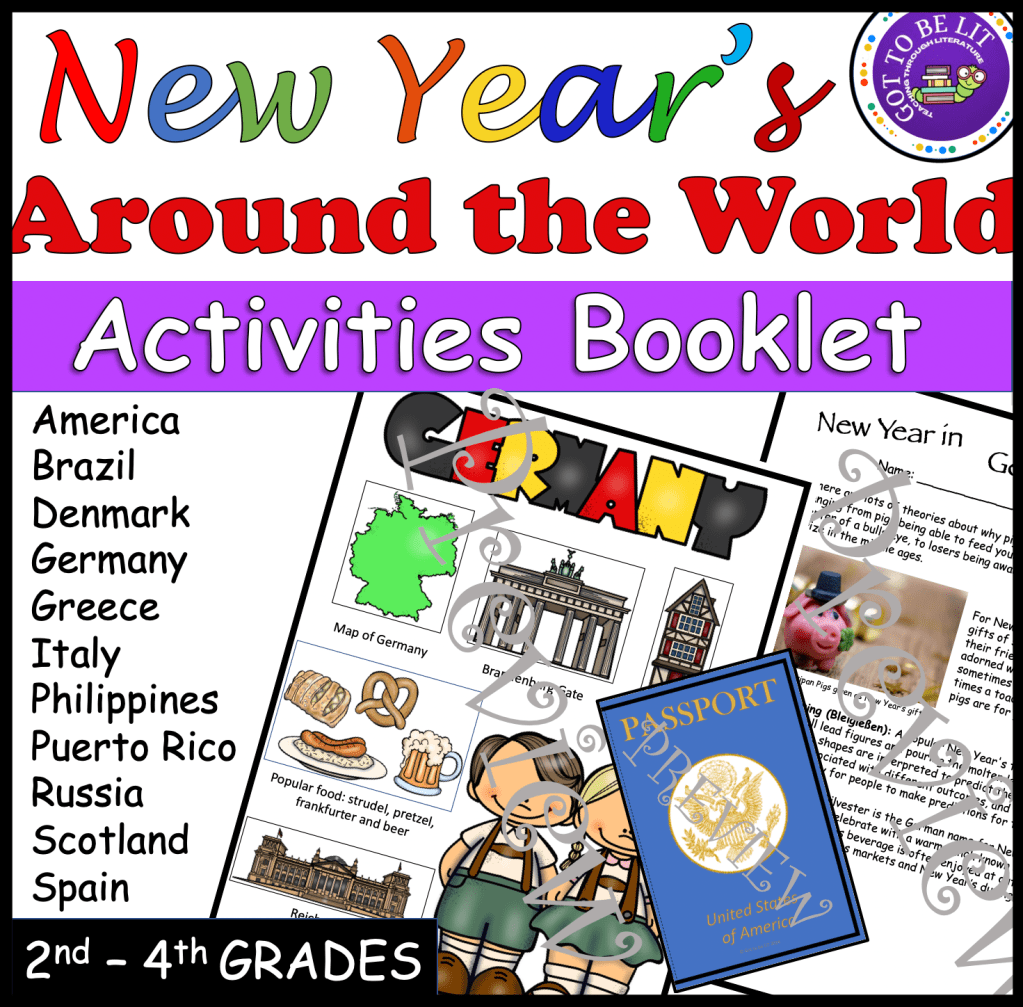
Kick off January with a classroom “takeoff” your students will never forget! New Year’s Around the World invites learners to explore 11 countries and discover the fun, surprising, and meaningful traditions people use to welcome a brand-new year. From jumping over seven waves in Brazil to wearing polka dots for good luck in the Philippines, this resource blends nonfiction reading, geography, cultural exploration, crafts, and writing into one engaging experience for 2nd–4th graders. It’s the perfect mix of learning and celebration as students return from winter break.
🌍 A Closer Look at What’s Inside
Below are the six key components of this resource—each one represented in the images—and how teachers can use them to elevate instruction, build engagement, and offer meaningful cross-curricular experiences.
1. Destination Posters (Color & Black-and-White)
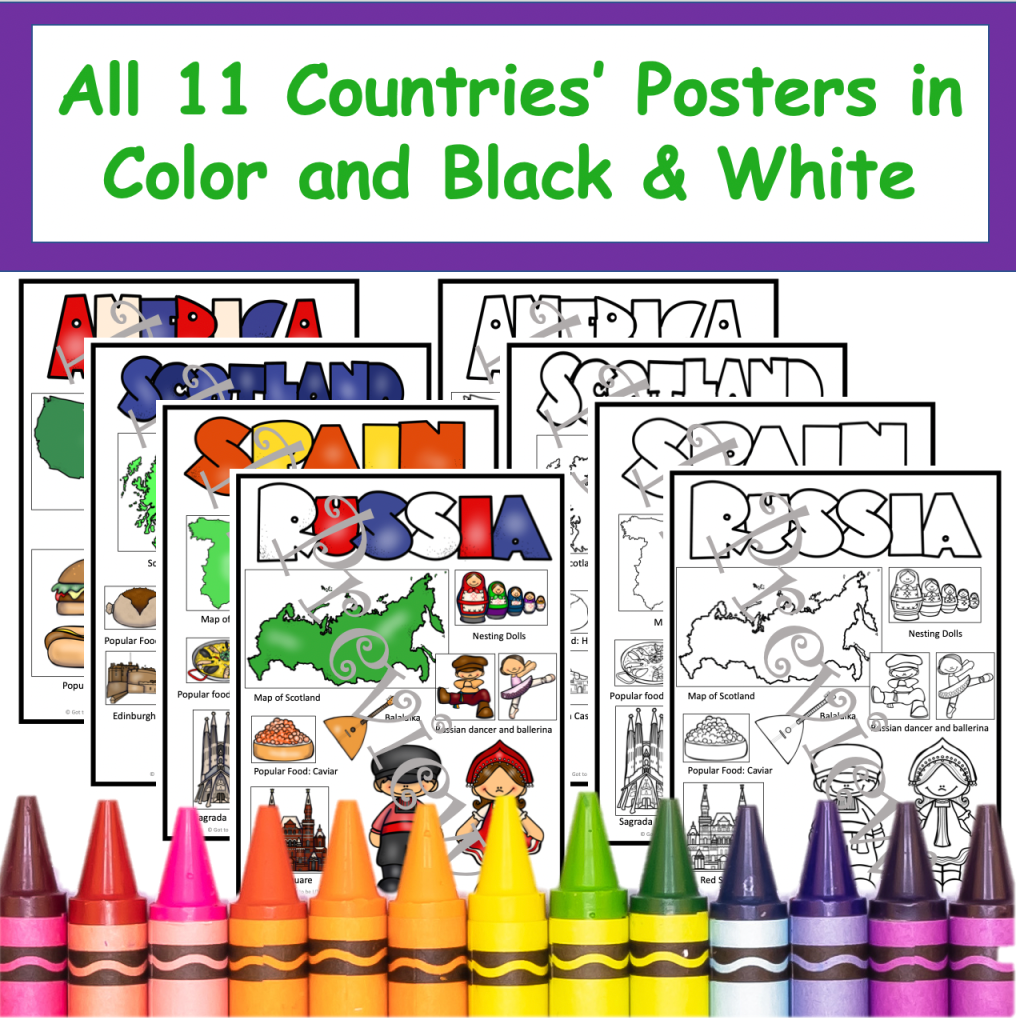
These posters serve as the perfect “landing point” for each country. The full-color versions make eye-catching displays for bulletin boards, hallway showcases, or center rotations, while the black-and-white versions give students opportunities to color, personalize, or assemble their own travel booklet. Each poster highlights essential facts and provides visual context, helping students immediately understand where they are traveling next.
How teachers use them:
- One 3rd-grade teacher creates an “airport gate wall” where each poster marks a gate to the next country.
- A 2nd-grade teacher scans the posters into Google Slides for a digital globe-trotting experience on the smartboard.
Teacher Testimonial:
“The posters alone made my students SO excited. Every time I pulled out a new one, they cheered like we were really traveling!” — Mrs. H, 2nd Grade
2. Information Pages with Real Photos

Every country comes with a high-interest nonfiction passage packed with kid-friendly facts and vibrant photographs that bring each destination to life. Students learn about geography, cultural traditions, and special New Year’s customs while practicing informational reading skills. These pages are ideal for guided reading, partner reading, close reading practice, or independent work—and they make great mentor texts for teaching main idea, key details, text features, and summarizing.
How teachers use them:
- One teacher uses them as mini–close reading passages for literacy centers.
- Another creates a class anchor chart comparing traditions across countries using the information pages.
Teacher Testimonial:
“My students were glued to every picture. The passages were the perfect length—informative but not overwhelming!” — Ms. G, 3rd Grade
3. Passports, Flags & Journal Pages
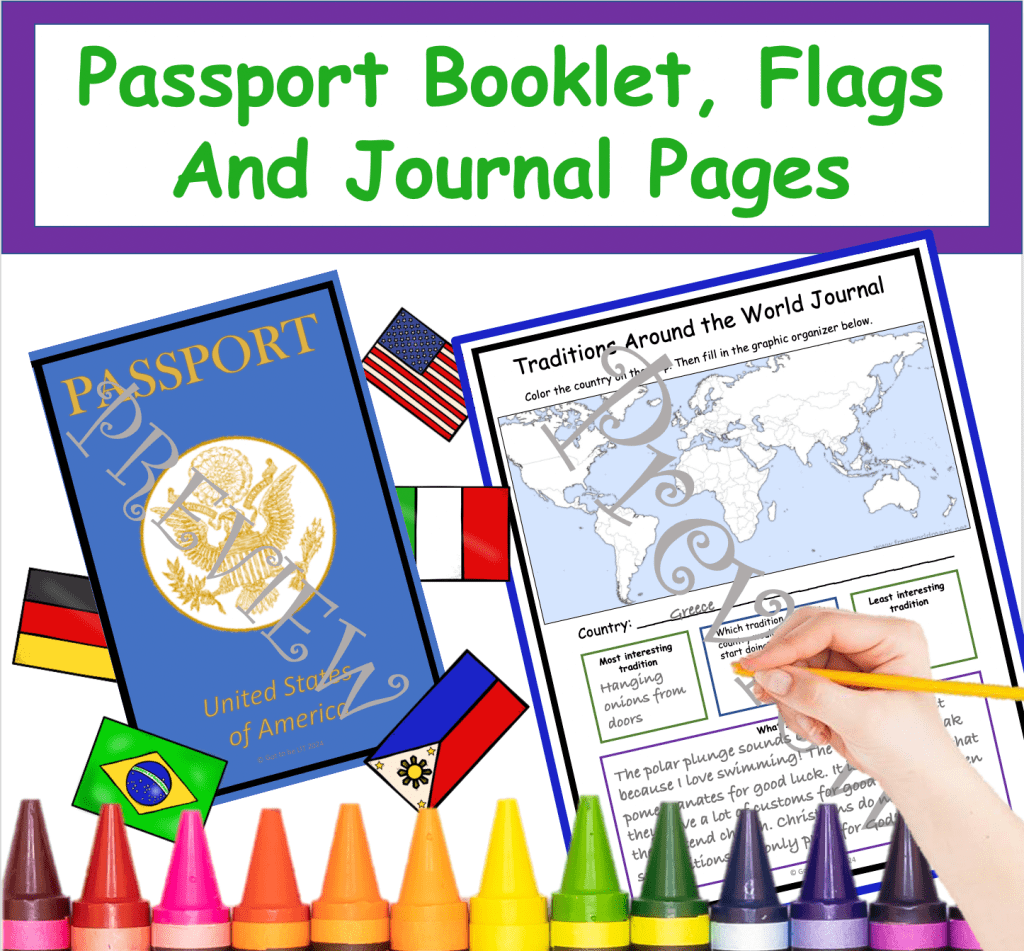
No international adventure is complete without a passport! Students glue each country’s flag into their passport as they “travel,” making progress visible and exciting. The coordinating journal pages include simple graphic organizers that help students collect facts, reflect on traditions, and write about what surprised them or what they’d like to try. These journals can be used for morning work, writing centers, early finisher tasks, or a cumulative assessment at the end of the unit.
How teachers use them:
- A 4th-grade teacher turns the passport into a “ticket” students must get stamped before moving to the next center.
- A homeschooling parent uses the journals as part of a year-long geography portfolio.
Teacher Testimonial:
“The passports were the HIT of the whole unit. My class begged to get theirs stamped every day!” — Mrs. L, 4th Grade
4. Hands-On Crafts & Cultural Activities
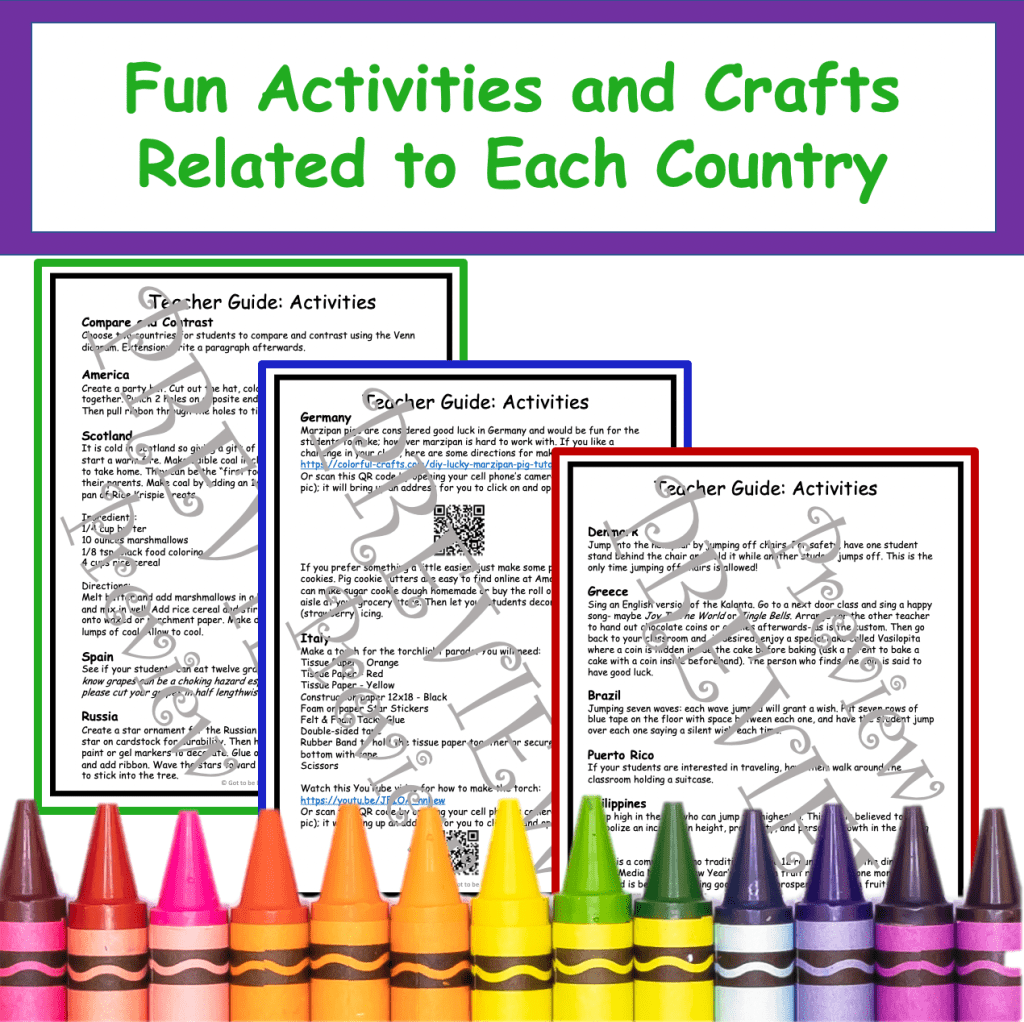
This is where the fun really takes off! Each country includes a memorable hands-on activity or craft tied directly to its New Year tradition. Students may create wave-jumping illustrations for Brazil, design polka-dot clothing for the Philippines, or participate in symbolic “good luck” customs. These activities help students experience the traditions—not just read about them—and deepen cultural understanding through creativity and movement.
How teachers use them:
- A teacher has students jump over blue paper “waves” taped to the floor for Brazil.
- Another lets students create their own polka-dot clothing design for the Philippines and display them in a “Good Luck Gallery.”
- A Denmark activity included paper plates labeled with encouraging words students “smash” on the carpet (safely with soft break-apart versions).
Teacher Testimonial:
“The activities helped the traditions CLICK. My students still talk about jumping over waves and smashing plates!” — Mr. T, 3rd Grade
5. Create a Student Travel Booklet

One of the most flexible parts of the resource, this booklet can be assembled using any combination of posters, information pages, flags, and journal entries. Teachers can use it as:
- a fast finisher project,
- a guided whole-class experience,
- an independent “research trip,” or
- a special keepsake students take home at the end.
Students feel proud of the final product because it reads like a real travel journal—complete with stamped destinations, recorded observations, and personalized reflections.
How teachers use them:
- One teacher uses the booklet as a culminating showcase for a hallway “World Travelers Museum.”
- Another uses it during morning work all January long, adding one country each day.
Teacher Testimonial:
“My students were so proud of their completed travel books. Parents LOVED them at conferences!” — Ms. K, 2nd Grade
6. A Center-Friendly Setup for Smooth Rotations
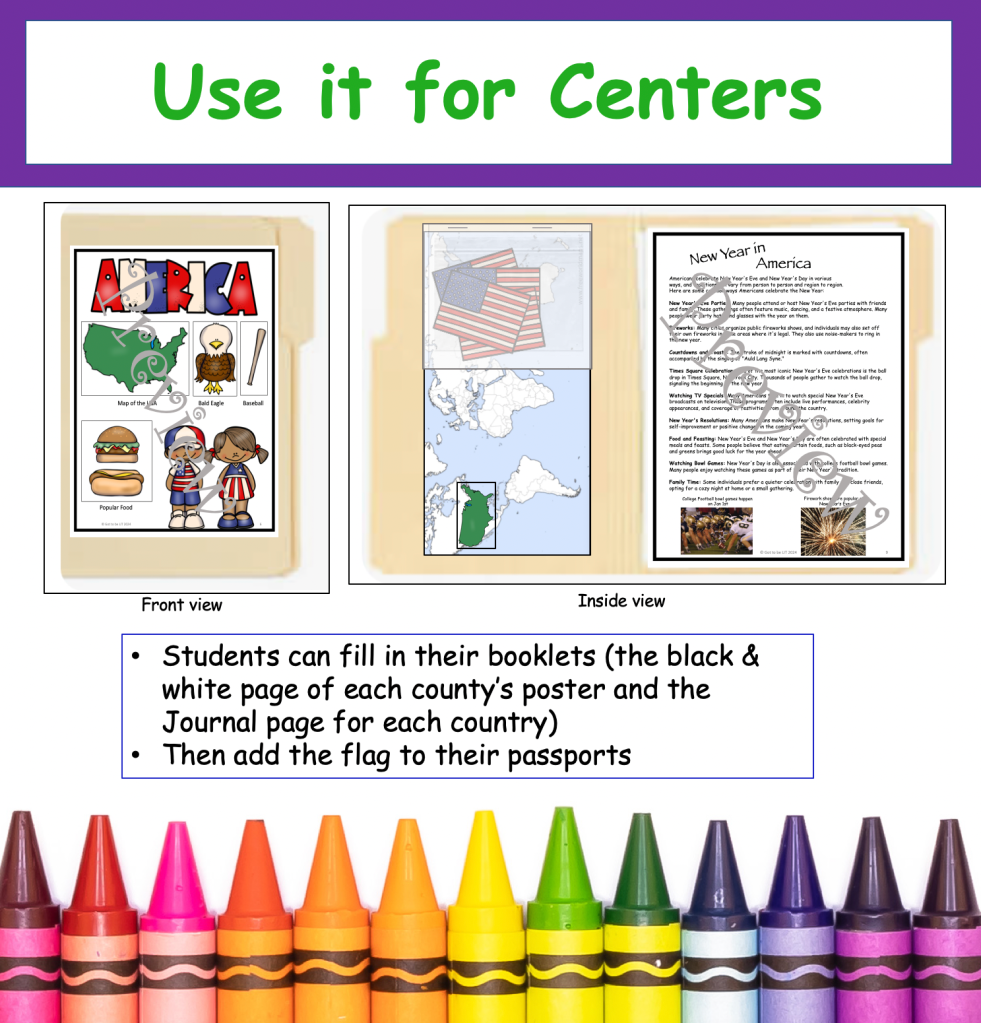
The resource includes everything needed to turn your classroom into a world-traveling learning hub. Arrange posters, passports, craft materials, and information texts into clearly labeled stations so students can rotate independently or in groups. This setup works beautifully for:
- literacy centers,
- social studies rotations,
- January enrichment activities, or
- a special “Around the World Day.”
Teachers love how easy the centers are to manage—students stay engaged, materials stay organized, and every stop feels like a new adventure.
How teachers use them:
- A teacher creates six rotation stations and lets students “board their flights” with boarding passes.
- Another designates a “Customs Checkpoint” where students answer a comprehension question before rotating.
Teacher Testimonial:
“This is the first time I’ve EVER had all my centers run smoothly the week after break. The kids were totally invested!” — Mrs. R, 3rd Grade
✈️ Ready for Takeoff?
If you’re looking for a meaningful, high-interest way to start the new year, this resource is the perfect classroom journey. It blends reading, writing, geography, and hands-on learning in a way students won’t forget. Click to explore the preview and plan your classroom adventure!
🌎 Closing Paragraph
Thanks for joining me on this virtual trip around the world! I hope this resource helps your students explore new cultures with curiosity and excitement. Here’s to a new year filled with learning, adventure, and smooth classroom “travels” ahead!
To check out my TpT store for more great resources, click the button below:
Discover more from Got to be LIT
Subscribe to get the latest posts sent to your email.

