

Vocabulary can make or break comprehension in elementary reading. Read aloud books give plenty of opportunity to teach vocabulary, but chapter books introduce many new words at once, which can feel overwhelming for young students 😅. But with intentional strategies, you can help students learn and remember vocabulary one chapter at a time ✨.
Below are practical, teacher-tested strategies, complete with classroom examples, step-by-step instructions, common challenges, differentiation tips, and reflection prompts.
1. Pre-Teach Key Vocabulary 📖
Purpose: Prepare students for tricky words before they read, so they can focus on comprehension instead of stopping to decode unfamiliar terms.
Step-by-Step Implementation:
- Choose 3–5 challenging words from the upcoming chapter.
- Provide kid-friendly definitions, examples, and visuals.
- Ask students to say the word aloud, use it in a sentence, or sketch a small illustration.
Classroom Example:
Before reading a chapter in Sophie Mouse and The Emerald Berries, the teacher introduced the words glimmering, frantically, and suspicious. Students sketched Sophie discovering glimmering berries and acted out “frantically” to internalize meaning.
Common Challenge ⚠️: Students forget the words while reading.
Solution ✅: Encourage students to keep a small “vocabulary notebook” or post sticky notes on pages as reminders.
Differentiation Tips ✨:
- Struggling readers: Pre-teach fewer words and provide visuals or sentence starters.
- Advanced readers: Include words in riddles, short writing prompts, or word families.
Reflection Prompt 💡: Which word was most exciting to learn today? Can you use it in a story or conversation?
2. Use Context Clues 🔍
Purpose: Teach students to infer word meaning from the surrounding text rather than relying solely on a dictionary.
Step-by-Step Implementation:
- Model a “think aloud” for an unfamiliar word.
- Example: “Hmm, the squirrel scurried frantically. Frantically must mean…?”
- Ask students to underline or highlight context clues in the sentence or paragraph.
- Discuss as a class before confirming the meaning.
Classroom Example:
In a guided reading group, students guessed “frantically” meant “quickly and nervously” after noticing Sophie was moving fast and worried about Hattie.
Common Challenge ⚠️: Students may rely on guessing without evidence.
Solution ✅: Always ask, “Which words helped you figure that out?”
Differentiation Tips ✨:
- Struggling readers: Provide a short list of possible meanings to guide thinking.
- Advanced readers: Encourage multiple interpretations and justification with text evidence.
Reflection Prompt 💡: How do context clues help you become a stronger reader?
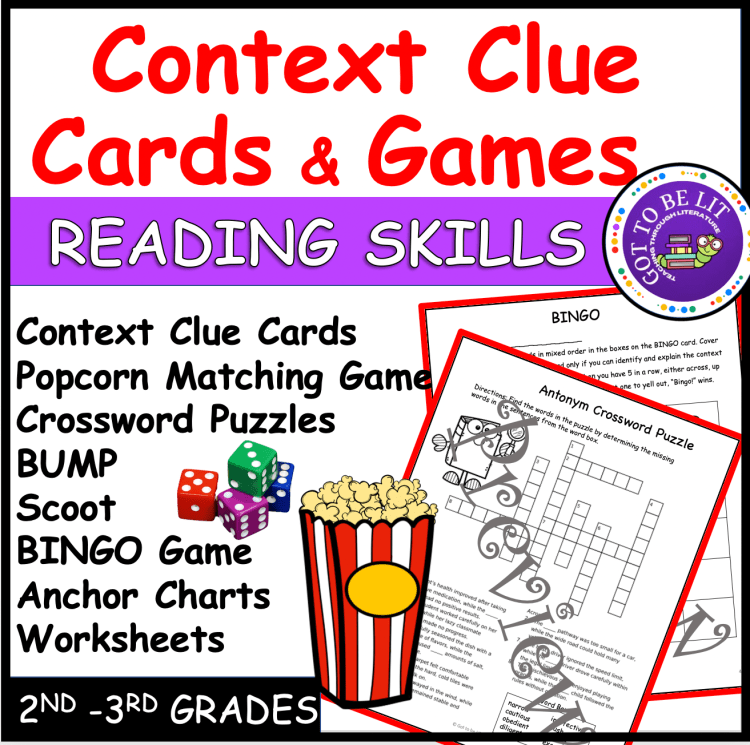
If your students need extra help with context clues, use these lessons and games to help:
3. Word Walls & Personal Dictionaries 📝
Purpose: Provide a visual and interactive reference for vocabulary that students are learning.
Step-by-Step Implementation:
- Create a classroom word wall for new vocabulary, adding words as chapters progress.
- Have students maintain personal dictionaries or notebooks with:
- Word and Definition
- Illustration or sentence
- Encourage students to refer to the wall or notebook while reading or writing.
Classroom Example:
Students reading Sophie Mouse and The Emerald Berries added glimmering, suspicious, and frantically to their personal dictionaries, drawing little pictures to show meaning.
Common Challenge ⚠️: Students may not use the wall actively.
Solution ✅: Incorporate the wall in discussions or quick games: “Who can use the word ‘glimmering’ in a sentence about today’s chapter?”
Differentiation Tips ✨:
- Struggling students: Limit personal dictionary entries to 1–2 words per chapter.
- Advanced students: Add sections for synonyms, antonyms, or idiomatic expressions.
Reflection Prompt 💡: Which new word do you want to teach a friend or family member this week?
4. Reinforce Through Writing ✍️
Purpose: Strengthen understanding by using words actively in sentences, summaries, or creative writing.
Step-by-Step Implementation:
- After each chapter, ask students to summarize using at least 2–3 new words.
- Encourage creative prompts:
- “Write a short diary entry as Sophie.”
- “Draw a comic strip using the new vocabulary.”
Classroom Example:
A student wrote: “Sophie moved frantically through the glimmering forest, suspicious of every sound.” The sentence demonstrated comprehension and retention of vocabulary.
Common Challenge ⚠️: Students may copy definitions without applying them.
Solution ✅: Require the words to appear in context or with illustrations to ensure understanding.
Differentiation Tips ✨:
- Struggling readers: Provide sentence starters or frames.
- Advanced readers: Ask students to include multiple new words or create short stories integrating the vocabulary.
Reflection Prompt 💡: Which sentence from your writing best shows your understanding of the new words?
5. Games & Interactive Activities 🎲
Purpose: Make vocabulary learning fun while reinforcing retention.
Step-by-Step Implementation:
- Choose a few words from the chapter.
- Turn them into activities like:
- Crossword Puzzles
- Matching words with definitions
- Word detective challenges in the text
- Fill-in-the-blank activities
- Debrief the activity, asking students to explain their reasoning.
Classroom Example:
Students searched the chapter for “glimmering” and “frantically” as part of a Word Detective challenge. They wrote sentences and drew small illustrations, competing to see who could find examples first.
Common Challenge ⚠️: Some students dominate games while others disengage.
Solution ✅: Use cooperative teams and rotate roles—reader, writer, illustrator—to include everyone.
Differentiation Tips ✨:
- Struggling students: Work in small groups with hints or partial word lists.
- Advanced students: Create more complex challenges like crosswords or story-based riddles.
Reflection Prompt 💡: Which activity helped you remember the most words, and why?
I have included vocabulary games in the Sophie Mouse Book Companions:

Extra Tips for Differentiation 🌈
- Partner Work: Pair stronger readers with peers who need support.
- Visual Supports: Use icons, color-coding, or illustrations to reinforce meaning.
- Home Connections: Encourage students to share one new word from each chapter with their family or use it in conversation.
Final Thoughts 💡
Vocabulary learning doesn’t have to be overwhelming or passive. By pre-teaching, using context clues, creating word walls, reinforcing through writing, and incorporating games, students can internalize new words and apply them to comprehension and writing.
If you want ready-to-use chapter-by-chapter vocabulary activities, comprehension questions, and prompts, check out my Chapter-by-Chapter Reading Guides/Novel Studies on Got to Be LIT. They make teaching vocabulary interactive, engaging, and stress-free for every elementary classroom!
To check out my TpT store, click the button below:
Discover more from Got to be LIT
Subscribe to get the latest posts sent to your email.


One thought on “Effective Strategies for Teaching Vocabulary”