
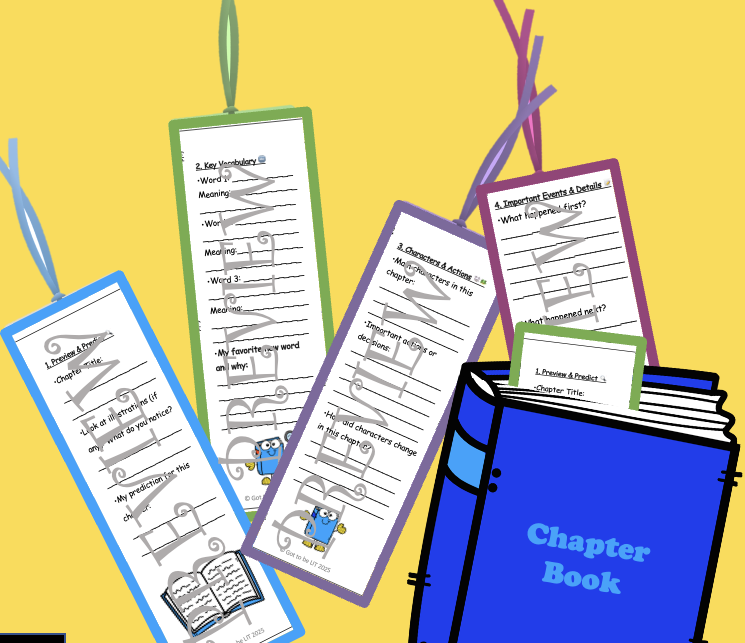
Reading chapter books can sometimes feel overwhelming for students 📚. They might lose track of characters, events, or vocabulary. That’s where interactive bookmarks come in—they turn reading into an active, hands-on learning experience ✨, helping students stay engaged, scaffold comprehension, and reinforce vocabulary.
In Sophie Mouse and The Emerald Berries, interactive bookmarks are designed to support chapter-by-chapter engagement, and you can easily adapt them to other texts as well. Below are strategies, step-by-step instructions, examples, common challenges, differentiation tips, and reflection prompts 💡.
1. Stay Engaged Chapter by Chapter 📖
Purpose: Help students focus on key details as they read, preventing “lost in the middle” moments.
Step-by-Step Implementation:
- Print bookmarks with pre-designed prompts for each chapter (e.g., “Who is the main character this chapter?” or “What problem arises?”).
- Students fill out sections while reading independently or during guided reading.
- Collect bookmarks periodically to review understanding and give feedback.
Classroom Example:
In a 2nd-grade class, students used bookmarks while reading Chapter 3. One student noted, “Sophie hears a noise in the bushes and wonders if it’s safe. I think it’s the squirrel!” This helped her recall events accurately during group discussion.
Common Challenge ⚠️: Students may rush through bookmarks without thinking.
Solution ✅: Model how to complete one section thoughtfully and encourage using text evidence.
Differentiation Tips ✨:
- Struggling readers: Reduce prompts to 2–3 per chapter and include sentence starters.
- Advanced readers: Add open-ended questions for predictions or analysis.
Reflection Prompt 💡: Which prompt helped you remember the most important part of the chapter?
2. Scaffold Comprehension Naturally 📝
Purpose: Break the story into manageable pieces to guide thinking, reflection, and discussion.
Step-by-Step Implementation:
- Include comprehension prompts for each chapter: main idea, characters, setting, problem, and solution.
- Encourage students to answer in full sentences or illustrate responses.
- Review responses in guided reading or small-group discussions to reinforce understanding.
Classroom Example:
A student wrote on her bookmark: “The problem is Sophie doesn’t know if the berries are safe. I think she will taste one next.” This prepared her to discuss cause-and-effect in the next class.
Common Challenge ⚠️: Students may struggle to summarize events clearly.
Solution ✅: Model summarizing a paragraph or event in 1–2 sentences before they begin.
Differentiation Tips ✨:
- Struggling readers: Provide a list of key events or vocabulary choices.
- Advanced readers: Ask for connections to prior chapters or personal experiences.
Reflection Prompt 💡: How did filling out your bookmark help you understand the story better?
3. Make Vocabulary Stick 🔤
Purpose: Reinforce key words in context, supporting both comprehension and retention.
Step-by-Step Implementation:
- Include sections for 2–3 vocabulary words per chapter.
- Ask students to define the word, use it in a sentence, or draw a quick illustration.
- Encourage students to refer back to bookmarks while writing summaries or completing activities.
Classroom Example:
A student illustrated “glimmering” by sketching Sophie discovering sparkling berries. Then she wrote: “The berries were glimmering in the sunlight.” This reinforced the word meaning through visual, written, and reading connections.
Common Challenge ⚠️: Students may only copy definitions without applying them.
Solution ✅: Require sentences or drawings to demonstrate understanding.
Differentiation Tips ✨:
- Struggling readers: Provide simplified definitions and examples.
- Advanced readers: Include multiple words per chapter or ask for synonyms/antonyms.
Reflection Prompt💡: Which vocabulary word did you enjoy learning most, and why?
4. Encourage Reflection & Critical Thinking 💡
Purpose: Help students connect personally to the story and develop higher-order thinking.
Step-by-Step Implementation:
- Include prompts such as: “If you were Sophie, what would you do next?” or “Why do you think Hattie made that choice?”
- Have students answer in writing or discuss with a partner.
- Review responses and encourage students to justify answers using the text.
Classroom Example:
One student wrote: “I would wait and watch carefully before touching the berries because I don’t know if they are safe.”This encouraged thoughtful reflection and sparked discussion about caution and bravery.
Common Challenge ⚠️: Students may give short answers like “good” or “bad.”
Solution ✅: Model complete responses and provide sentence starters: “I think… because…”
Differentiation Tips ✨:
- Struggling readers: Use multiple-choice or fill-in-the-blank prompts.
- Advanced readers: Ask students to analyze character motivations or compare chapters.
Reflection Prompt💡: Which decision made by a character surprised you most, and why?
5. Easy for Teachers to Implement ✅
Purpose: Minimize prep time while maximizing student engagement and learning.
Step-by-Step Implementation:
- Print and distribute bookmarks for each chapter.
- Collect periodically or check during guided reading.
- Use as a tool for discussion, assessment, or homework reflection.
Classroom Example:
A teacher noticed students were confused about a character’s choice. Using completed bookmarks, she quickly identified misconceptions and led a targeted mini-lesson to clarify.
Common Challenge ⚠️: Teachers worry about grading or extra work.
Solution ✅: Use bookmarks as formative assessments—check for completion and understanding rather than perfection.
Differentiation Tips ✨:
- Struggling readers: Pair with visual aids or sentence frames.
- Advanced readers: Assign extra reflection questions or creative tasks using the bookmarks.
Extra Tips for Engagement 🌈
- Gamify Reading: Turn bookmarks into a challenge—students earn stickers or points for completed prompts 🎉.
- Peer Review: Have students swap bookmarks and discuss answers in pairs or groups 💬.
- Home Connection: Encourage students to complete bookmarks while reading at home, then share with the class.
Final Thoughts 💡
Interactive bookmarks are a powerful, hands-on tool for chapter books. They help students:
- Stay focused and engaged chapter by chapter 📖
- Scaffold comprehension and reflection 📝
- Reinforce vocabulary in context 🔤
- Develop critical thinking and personal connection to the story 💡
If you want ready-to-use interactive bookmarks, comprehension prompts, and vocabulary activities for Sophie Mouse and The Emerald Berries and other chapter books, check out my Got to Be LIT TpT store. My resources make reading interactive, stress-free, and engaging for every elementary classroom!
Click this button to go directly to my TpT store, Got to Be LIT.
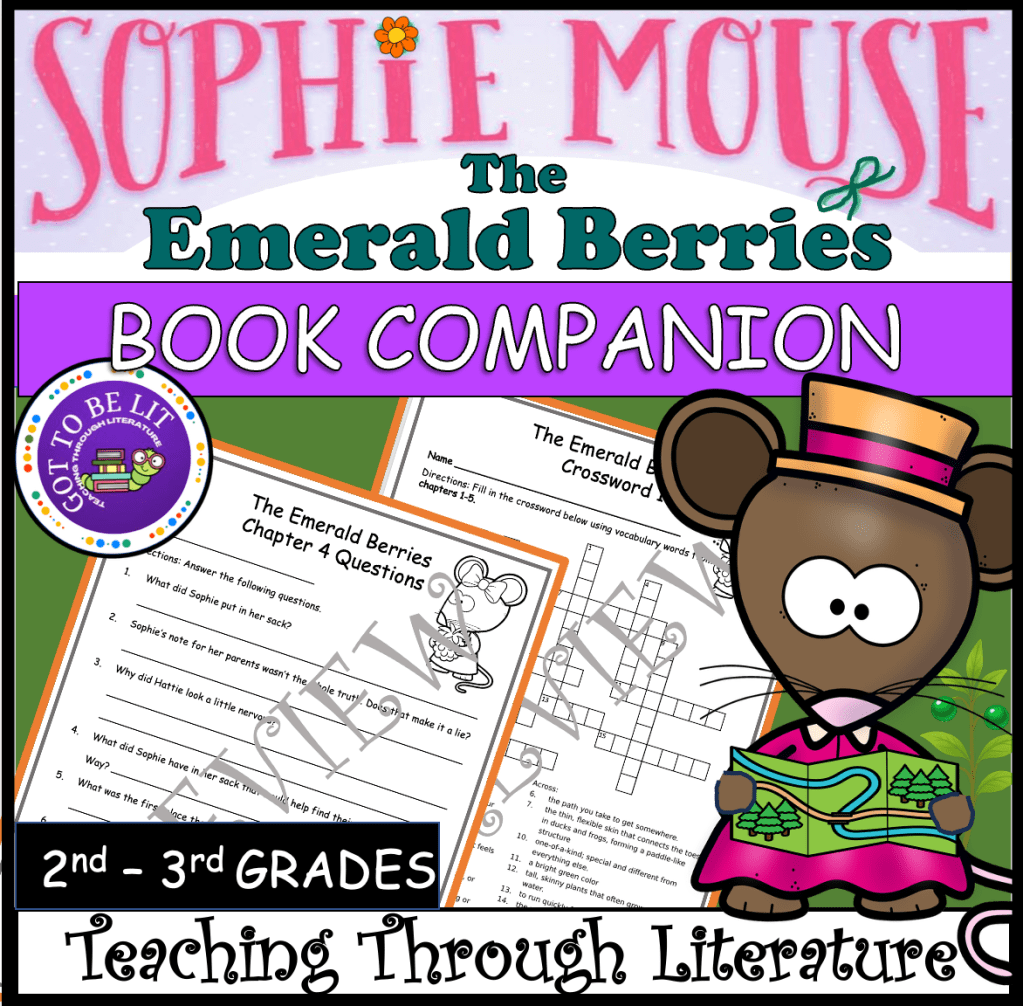
Click the image below to purchase Sophie Mouse and the Emerald Berries.
Discover more from Got to be LIT
Subscribe to get the latest posts sent to your email.

