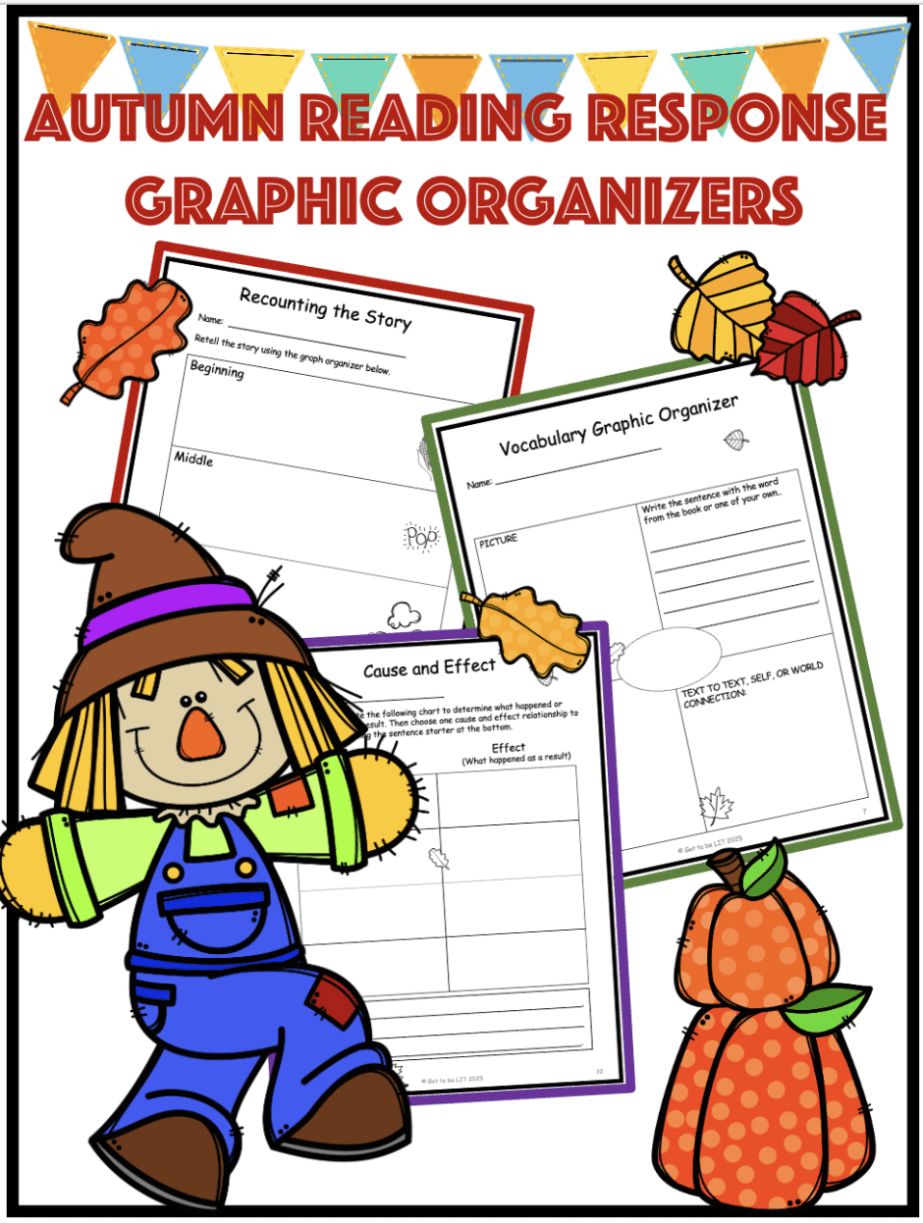
Chapter books are full of exciting stories 📚, but they can also feel overwhelming for students 😅. Long passages, multiple characters, and plot twists can make it difficult for young readers to stay focused and retain information. One of the most effective ways to help students understand and actively engage with the text is through graphic organizers 📝.
Graphic organizers turn abstract ideas into tangible visuals, helping students process information while they read. Below are my top 5 organizers, complete with classroom examples, step-by-step implementation tips, and differentiation strategies.
1. Character Charts 👤
Purpose: Track traits, feelings, motivations, and relationships to deepen comprehension.
Step-by-Step Implementation:
- Provide students with a blank chart including columns for: Name, Traits, Feelings, Actions, and Relationships.
- As students read a chapter, have them fill in each column with examples from the text.
- After reading, discuss findings in pairs or small groups to compare interpretations.
Classroom Example:
In a 3rd-grade classroom reading Sophie Mouse and The Emerald Berries, students tracked Sophie, Hattie, and the squirrel. One student noted that Sophie “shows curiosity when exploring the forest,” while another added, “She is careful because she worries about Hattie.” Discussing differences encouraged critical thinking.
Common Challenge ⚠️: Students sometimes leave blank spaces because they feel unsure.
Solution ✅: Model filling out the first row together as a class and provide sentence starters like: “I think [character] is… because…”
Differentiation Tips ✨:
- For struggling readers: Pre-fill parts of the chart with key traits or actions.
- For advanced readers: Add a column for predictions about character behavior or motivation.
Reflection Prompt 💡: Which character do you relate to most and why? How might their choices influence the story?
2. Story Maps 🗺️
Purpose: Help students visualize the structure of the story—beginning, middle, end, conflict, and resolution.
Step-by-Step Implementation:
- Provide a blank story map template.
- After reading a chapter, ask students to summarize key events in each section of the map.
- Encourage them to add details about the setting and important plot twists.
Classroom Example:
In a guided reading group, students mapped Sophie’s discovery of the emerald berries. One student wrote “Sophie smells something sweet → follows the smell → finds berries → wonders if it’s safe to eat.” This helped students recall sequential events for discussion.
Common Challenge ⚠️: Students may write only one-word summaries.
Solution ✅: Encourage at least 2–3 sentences per section and model examples using a “think aloud” strategy.
Differentiation Tips ✨:
- Struggling students: Use a partially completed map or sentence starters.
- Advanced students: Add sections for predicting future events or analyzing character decisions.
Reflection Prompt 💡: Which event in the chapter surprised you most, and why? How did it affect the characters?
3. Timeline of Events ⏳
Purpose: Visualize story events in chronological order, which supports comprehension and prediction skills.
Step-by-Step Implementation:
- Draw a horizontal or vertical line on chart paper or in a notebook.
- Mark major events from each chapter along the timeline.
- Ask students to add small notes or illustrations to highlight key actions.
Classroom Example:
Students in a 2nd-grade classroom reading a multi-chapter book drew timelines of Sophie’s Forest adventure. One student added a small leaf next to the point where Sophie discovered the berries, helping classmates remember the event more vividly.
Common Challenge ⚠️: Students may forget earlier events.
Solution ✅: Encourage revisiting previous chapters and using sticky notes to track events as they read.
Differentiation Tips ✨:
- Struggling students: Limit the timeline to one chapter at a time.
- Advanced students: Include a “prediction” row to add potential outcomes.
Reflection Prompt 💡: How do the events in this chapter connect to what happened previously? Can you predict what might happen next?
4. Vocabulary Webs 🔤
Purpose: Help students learn new words by connecting definitions, synonyms, and examples to the story.
Step-by-Step Implementation:
- Choose 3–5 key words from the chapter.
- Create a central circle with the word, then branch out to include: definition, example sentence, synonym/antonym, and small illustration.
- Encourage students to reference the web as they continue reading.
Classroom Example:
While reading Sophie Mouse and The Emerald Berries, students created a web for “glimmering”: definition (“shining faintly”), a sentence (“The berries were glimmering in the sunlight”), and a quick sketch of the berries on the page.
Common Challenge ⚠️: Students forget to connect the word to the story.
Solution ✅: Require a sentence from the chapter using the word or illustrate it in context.
Differentiation Tips ✨:
- Struggling readers: Provide partial webs with definitions already filled in.
- Advanced readers: Add a branch for figurative language or related idioms.
Reflection Prompt 💡: Which new word from this chapter can you use in your own writing this week?
5. Cause-and-Effect Charts ⚡
Purpose: Teach students to identify how events are connected in the story.
Step-by-Step Implementation:
- Provide a two-column chart: “Cause” on the left, “Effect” on the right.
- As students read, have them identify events and their results.
- Encourage students to discuss the impact of these events in small groups.
Classroom Example:
One student wrote: Cause: “Sophie follows the sound of rustling leaves.”
Effect: “She discovers the hidden berries.”
Discussing this in pairs helped students understand story structure and plot development.
Common Challenge ⚠️: Students may confuse cause and effect.
Solution ✅: Model a few examples and ask guiding questions: “What happened first? What happened because of it?”
Differentiation Tips ✨:
- Struggling students: Limit to one or two events per chapter.
- Advanced students: Add a third column for predictions or connections to real-life events.
Reflection Prompt 💡: How do these cause-and-effect relationships help you understand the character’s choices?
Extra Tips for Differentiation 🌈
- Partner Work: Pair students strategically—stronger readers can model strategies for peers.
- Visual Supports: Use color-coding, icons, or illustrations to help struggling readers make connections.
- Choice Boards: Let students choose which organizer to use for certain chapters to increase engagement.
Final Thoughts 💡
Graphic organizers aren’t just worksheets—they’re tools that guide thinking, encourage reflection, and build independent comprehension skills. By using character charts, story maps, timelines, vocabulary webs, and cause-and-effect charts, students can tackle chapter books with confidence and curiosity 🌟.
If you want ready-to-use organizers, comprehension questions, vocabulary activities, and prompts organized by chapter, check out my Chapter-by-Chapter Reading Guides on Got to Be LIT. They save prep time and make reading engaging, interactive, and fun for every student!
Check out my store on TpT for more fun time-saving resources.
Discover more from Got to be LIT
Subscribe to get the latest posts sent to your email.

