
Classroom-Friendly Tips for a Smooth and Successful Experience
If you’ve ever wanted to try a reading escape room but felt overwhelmed by the logistics, you’re not alone. The idea of turning your classroom into a mini mystery-solving adventure sounds amazing—but managing groups, papers, and time? That can feel like a lot.
Here’s the good news: it doesn’t have to be chaotic. With a little prep and a few classroom-tested strategies, reading escape rooms can become one of your go-to activities for engagement and literacy skill practice.
Here are my top tips for pulling it off without pulling out your hair.
🎒 1. Prep Ahead of Time: Use Folders or Color-Code for Easy Organization
Nothing slows down the momentum like missing materials or students mixing up clues. Before the big day, organize each team’s escape room tasks in a folder or envelope. You can even color-code the sets:
- 🔴 Red folder = Team 1
- 🔵 Blue folder = Team 2
- 🟢 Green folder = Team 3
- 🟡 Yellow folder = Team 4
Label each task clearly (Task 1, Task 2, etc.), and if it’s a multi-page set, staple or paperclip it together. This small step upfront will save you tons of redirecting later on.
👥 2. Group Students in Teams of 2–4 for Best Results
Small groups work best for reading escape rooms. I’ve found that 2–4 students per team is the sweet spot:
- ✌️ 2 students: More reading, more responsibility
- 🎲 3–4 students: Great for collaboration and discussion
Assign roles if needed—Reader, Writer, Clue Checker, and Runner—to keep everyone involved and minimize the “too many cooks” issue.
⏰ 3. Use a Timer to Add Excitement and Structure
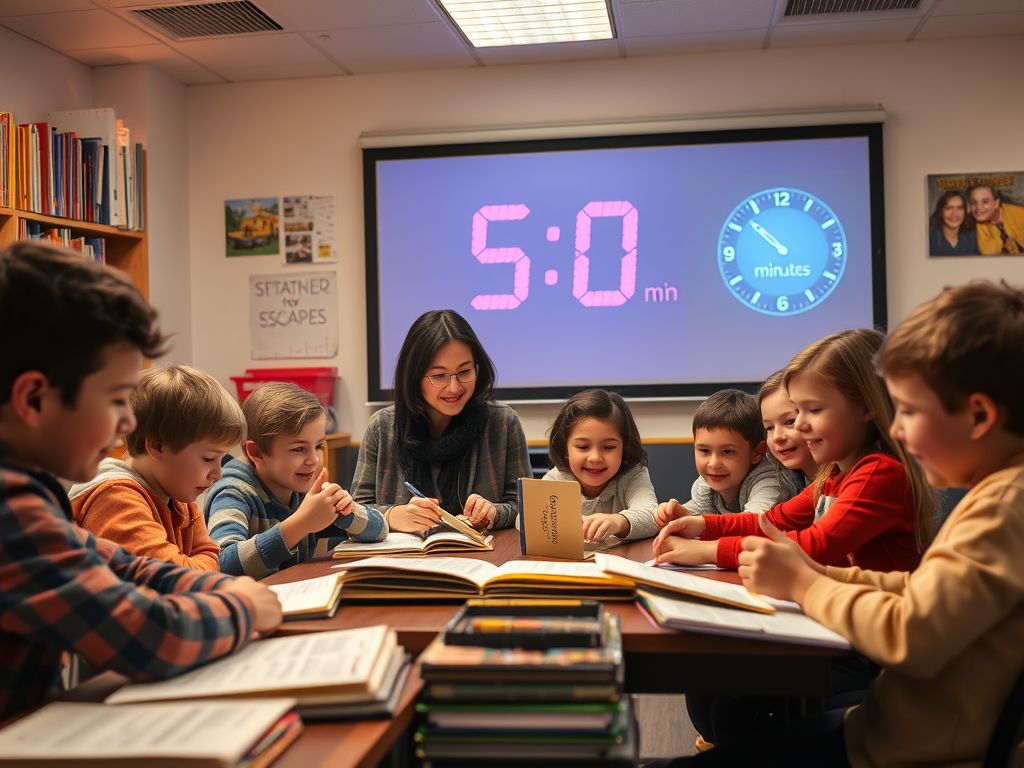
Project a large timer on your board or screen. Whether you give students 30, 45, or 60 minutes depends on the room, but the visual adds instant urgency and focus.
Try fun music in the background to build atmosphere. (Think: Mission Impossible, spy themes, or soft instrumental beats.)
Bonus tip: Let teams who finish early work on a secret bonus riddle, word puzzle, or word search to keep them engaged.
🏅 4. Build in Simple Rewards—They Work Wonders
Motivation matters, especially when solving multiple reading tasks. Prizes don’t have to be expensive or sugary! Try:
- 📚 Bookmarks
- ✏️ Pencils or fun erasers
- 🕵️♀️ Brag tags (“I Escaped!” or “Reading Detective”)
- 🎖️ Certificates of Completion
- 👑 Class shoutouts or bonus points
It’s all about celebrating their effort and teamwork.
📆 5. Plan Escape Rooms for the Right Moments
Reading escape rooms are perfect for:
- 📅 Back to school: Build classroom community from day one
- 🌟 Fun Friday: Keep reading skills sharp in a new way
- ✅ Review days: Reinforce comprehension, vocabulary, and reading standards
- 🍂 Seasonal events: Great for holidays or right before a break
They’re flexible enough to plug into your plans whenever you need a boost of energy and engagement.
🔍 Want Ready-to-Go Reading Escape Rooms?
If you’re ready to try one (or five!), I’ve created themed escape rooms that require minimal prep and no tech. Just print, organize, and go!
Check out these favorites:
- 🖍️ School Supply Scramble – A FREE back-to-school mystery
- 🚌 On the Bus – A transportation-themed challenge
- 🕵️♂️ The Mystery of the Missing Lunch Lady – A detective-style escape
- 🌲 Reading Ranger: Trail to Treasure – A nature-themed ranger adventure
Each one includes a full teacher guide, task cards, answer keys, and reward ideas.
👉 Reading Comprehension Escape Rooms
The key to escape rooms is to keep it fun. Learning doesn’t have to be boring. Creative teaching doesn’t have to be difficult.
To check out my store, click the button below.
To get notified of new content and stay up-to-date on my posts, type in your email and click the subscribe button.
Discover more from Got to be LIT
Subscribe to get the latest posts sent to your email.

