As teachers, we all want to inspire our students to become lifelong learners and critical thinkers. We want them to engage with the world around them and develop empathy for others. The Common Core State Standards (CCSS) provide a framework for teaching essential skills that will prepare our students for success in college, career, and life. In this article, we’ll explore how the CCSS can help us build strong reading and analytical skills in our elementary students, foster empathy, and connect them to the world around them.
Making Text-to-Self Connections
If a student were to say, “When Nash was excited to show his friends his new toy rocket, it reminded me of the new toy I got for Christmas. I wanted to bring it to school to show my friends, too,” it could help other students understand how Nash was feeling and why he did what he did.
Steer the conversation back to text
The Common Core State Standards (CCSS) do not include phrases like “make text-to-self connections,” “explore ideas in a personal response,” or “relate the text to your own life.” It’s easy for discussions to veer off-topic when students make personal connections to the text. While individual experiences can help students engage with the material, teachers must steer the conversation back to the author’s intended purpose and original ideas rather than allowing the conversation to stay solely on personal experiences. By doing so, students can better understand how their connections relate to the author’s message and deepen their understanding of the text. For example, simply saying, “I have a friend named Nash,” doesn’t add anything to a discussion about a story. However, if a student were to say, “When Nash was excited to show his friends his new toy rocket, it reminded me of the new toy I got for Christmas. I wanted to bring it to school to show my friends, too,” it could help other students understand how Nash was feeling and why he did what he did. This approach aligns with the CCSS, emphasizing the importance of focusing on the text and the author’s intended meaning.
Making Text-to-Text Connections
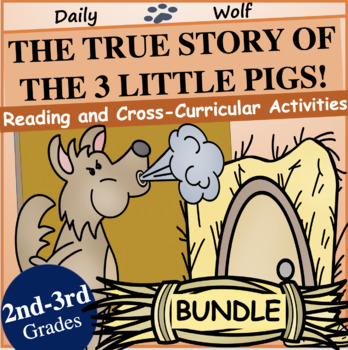
Additionally, the CCSS encourages students to make text-to-text connections across multiple texts, allowing them to compare and contrast different authors’ approaches to similar themes or topics. As elementary educators, we can help our students make text-to-text connections by allowing them to compare and contrast books with similar themes. For example, we might ask our students to read “The Three Little Pigs” and “The True Story of the Three Little Pigs” to compare and contrast the different characters’ perspectives. We can even use the same book, “The True Story of the Three Little Pigs,” to correspond to the movie “The Bad Guys” to make connections from text-to-media.
Making Text to World Connections
Furthermore, the standard also emphasizes the importance of making connections to the world. We can help students connect to current events by reading books like “The Day the Crayons Quit” and discussing how it relates to the importance of expressing oneself and standing up for what is right. By doing so, we are helping our students build critical thinking skills, fostering empathy, and encouraging them to connect to the world around them.
Conclusion
In conclusion, the CCSS standards provide a clear framework for educators to help students build strong reading and analytical skills. As elementary educators, we can engage our students in rich discussions and activities that allow them to explore different perspectives and connect with the world around them. By aligning our teaching with the CCSS standards, we can give our students the tools they need to become thoughtful, engaged, and empathetic citizens of the world
I have a bachelor of science degree from Texas A&M University in elementary education specializing in reading. I enjoyed teaching second grade before I had children. Then I had the blessing of home-schooling all four of my kids. During that time, I also taught several classes for other home-schoolers. I am now an empty nester, but I’m not ready to retire. I created many of my own literature units over the years, and I would like to share my knowledge and expertise on this blog to help home-schooling parents and fellow teachers.
View more posts
2 thoughts on “Teaching Reading with the CCSS: Making Connections to Self, Across Texts, and to the World”



2 thoughts on “Teaching Reading with the CCSS: Making Connections to Self, Across Texts, and to the World”