

Background knowledge is often something we teachers overlook by jumping into the lesson, but it is crucial in helping students understand and retain new knowledge. For instance, a memory came up on my Facebook page recently where I posted a conversation between my youngest son and me:
The joy of homeschooling is seeing those lightbulb moments- even when it takes a few years! Bryce and I were reading a poem that used personification. And he brought up reading Pilgrims Progress a few years ago (a child’s version) where the characters’ names described the character- he associated it with personification. He said, “I didn’t understand back then why the characters had weird names, but now I get it.”
He was able to take a book we read years ago and use it as a hook to add new knowledge. Once he could hook that information to previous knowledge, he could understand and remember the new knowledge. That’s the way our brains work. Our brains “tie the concept to other topics from the class or real life, challenging the students and the brain cells within them to form the associations that can aid long-term memory formation and retrieval” (https://www.ncbi.nlm.nih.gov/pmc/articles/PMC5459260).
The knowledge of how our brains work is why Rosenshine, in his “Principles of Instruction,” urges us to “Begin a lesson with a short review of previous learning.” (Rosenshine, 2012, p.12). But what is essential here is not that we review what we taught yesterday but that we review the topic that explicitly relates to the current lesson. For example, if today’s lesson is on onomatopoeia, then build on background knowledge by asking, “Have you ever had a mosquito fly close to your ears? What sound does it make?” If you live in the south as I do, you know that everyone has had a mosquito buzz in their ears. The knowledge of that sound is a hook to which the students can add new information. In this case, the label onomatopoeia.

Three strategies we teachers can implement to help retrieve or build background knowledge:
1. Concept sort: this activity will build background knowledge if used before reading. For example, use vocabulary words for a science lesson on recycling. Write on the sticky notes these words or bring in the objects themselves (cleaned, of course): newspaper, cereal box, ketchup bottle (plastic), mayonnaise jar, computer paper, pizza box, soup can, aluminum foil, water bottle. Then write on a poster four categories: aluminum, glass, paper, and plastic. As a class, decide under which category each sticky note belongs. Here is a YouTube video of a teacher implementing this strategy: https://www.youtube.com/watch?v=d_R5wfmWIlQ&t=264s
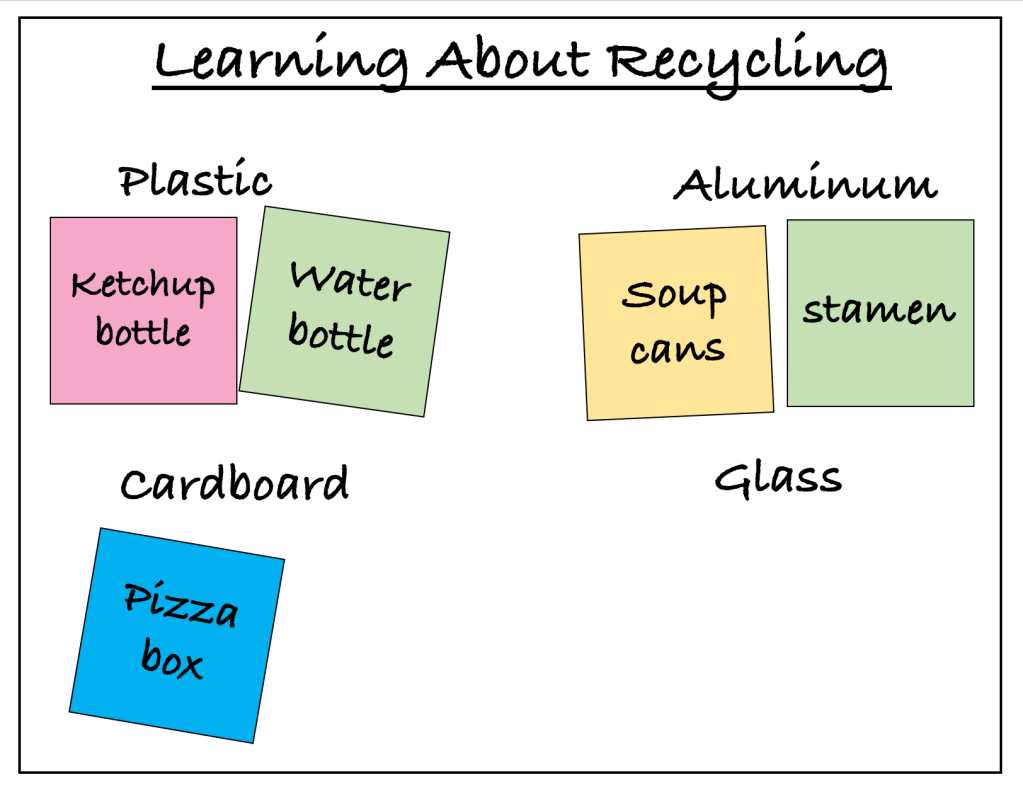
Categorizing object begins to develop concepts and, in this case, will provide the background knowledge needed to learn about recycling, especially if the student has never recycled before.
2. Compare, contrast, comprehend: Use compare-contrast text structures to stimulate and increase students’ background knowledge. In honor of Earth Day this month, an example involves the book Are Trees Alive by Debbie S. Miller (2002). The author asks the reader to make connections between trees (new information) and their bodies (something they know about). For example, one page compares the sap from a tree to the blood in a human body. Additionally, the author asks the reader to look at the veins in a leaf and compare them to the veins on the back of the reader’s hand. When making this kind of comparison, students connect the new learning with what they already know.
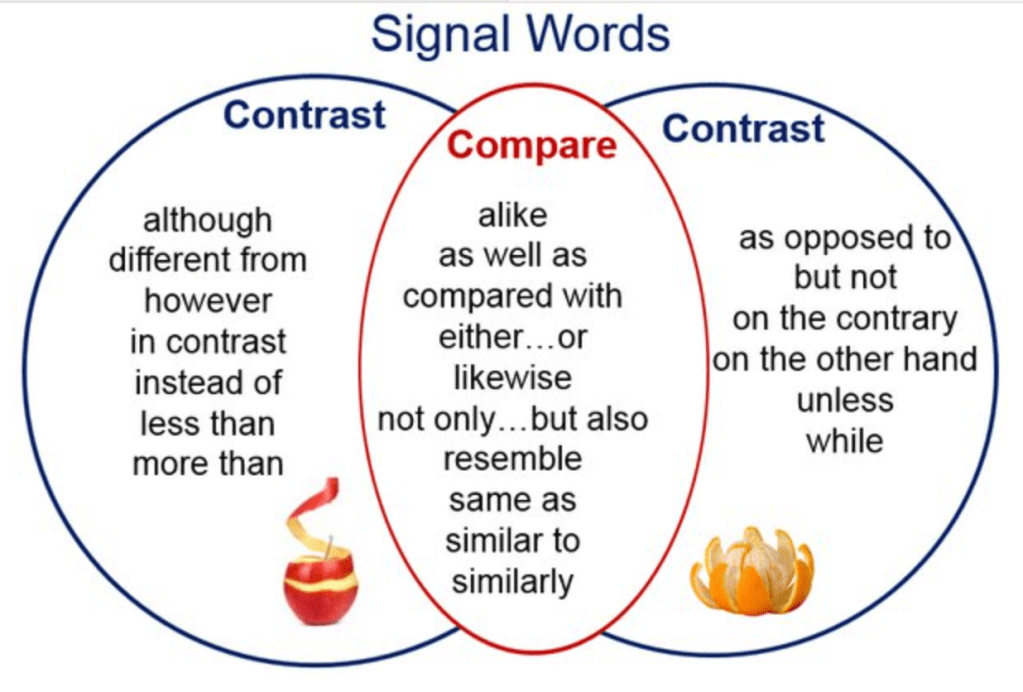
However, the structure of compare and contrast may be new to students, so be sure to discuss the vocabulary common to this structure: Comparing similarities- also, like, alike, identical, equivalent, just as…so too, likewise, counterpart, similar to, similarly, in comparison, both, not only, but also, have in common, share the same, in the same manner, in the same way, neither ; Contrasting differences- although, but, while, whereas, in contrast to, however, though, on the other hand, nevertheless, unlike, in contrast, on the contrary, instead of. Learning the vocabulary reserved for the structure of comparing and contrasting will also aid students when they are writing compare and contrast paragraphs.
3. Use videos (YouTube) to help students build a shared knowledge base. In my unit on Cranberry Thanksgiving, I offer a link to a video on cranberry bogs. It provides information about how cranberries grow and what a bog is, and then all the students have the same background information, and they can picture it in their heads when they come across “cranberry bog” while reading the story.

Help your students make neural connections by implementing teaching strategies that build background knowledge. In this way, your students will be able to hook new knowledge onto previous knowledge and store it in long-term memory, just like my son did.
Discover more from Got to be LIT
Subscribe to get the latest posts sent to your email.


5 thoughts on “Strategies to Build Background Knowledge”